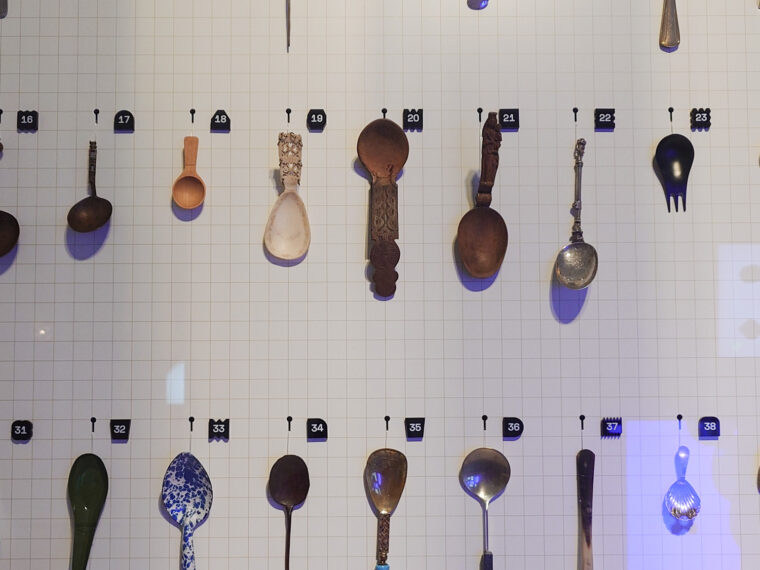
…mit wenig Gebackenem, einem Restaurantbesuch (Mochi Ramen Bar), einem Magazin (DUMMY), zwei Strickprojekten (My Dream Cardigan und Klimawandeltuch) – und wie immer, den besten Links der vergangenen Woche.
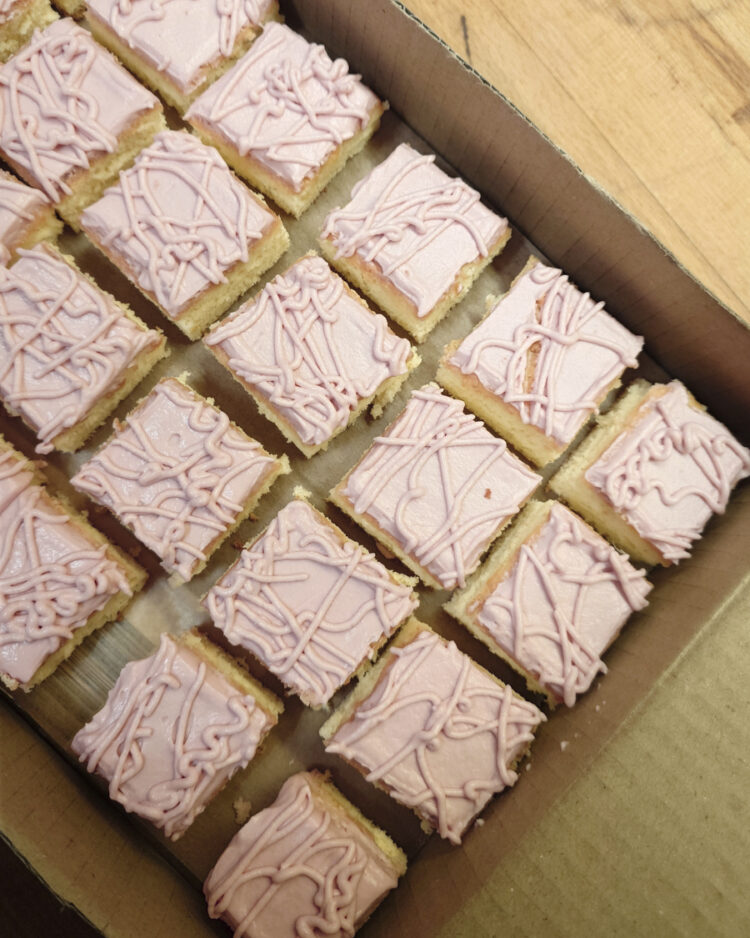

Seit dem letzten Zuckersüß habe ich Biskuitschnitten mit Zitronensirup und übriger Verbenen-Ganache gebacken. Ich wurde darauf hingewiesen, dass sie ausschauen, wie dieses Gemälde von Max Freund – ich sehe die Ähnlichkeit, dabei war mein Design einfach nur Restlverwertung…
Gegessen
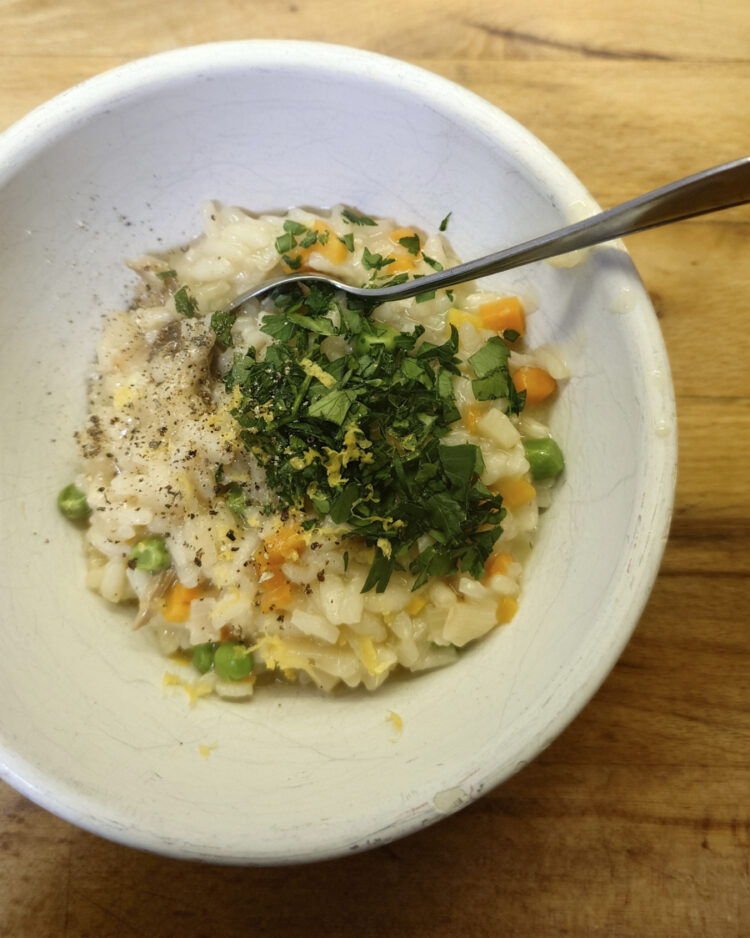
Buttermilch-Kaiserschmarrn. Pizza Margherita von meinem Mitbewohner. Risotto mit Karotten, Erbsen und allerlei getrockneten Schwammerln. Polenta-Pfannkuchen mit VIEL Zucker.
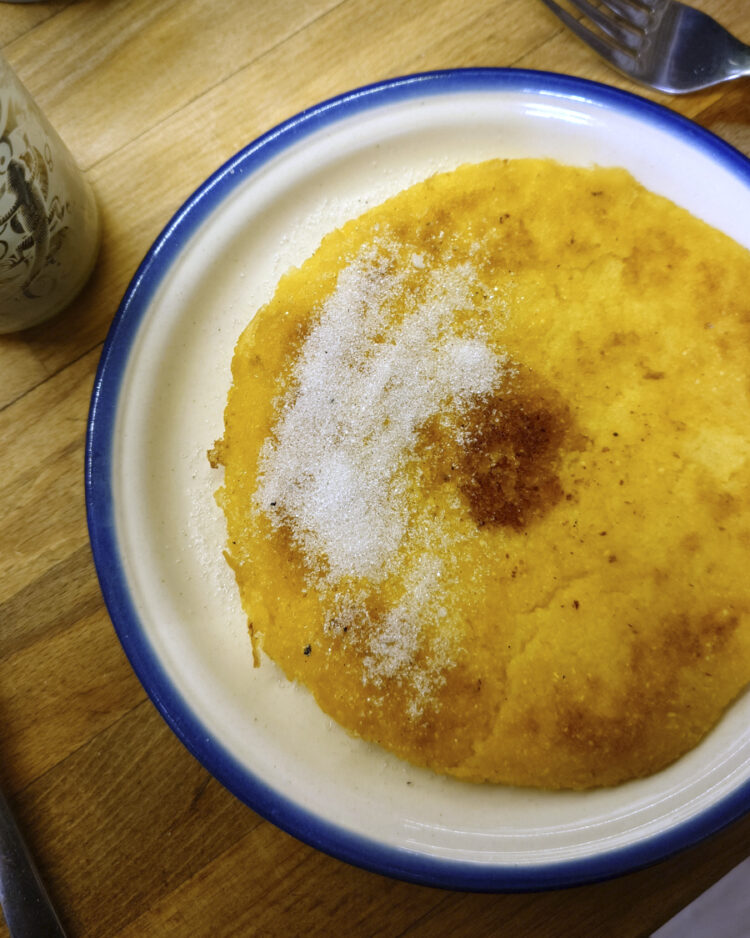

Einen Krapfen mit SEHR viel Marillenmarmelade vom Öfferl (1180, 3,90€) am Faschingsdienstag. Ein Pain au Chocolat von Motto Brot (1060, 2,80€). Einen Walnuss-Riegel vom Anker aus dem Westbahn-Automaten – einerseits finde ich cool, dass es dort nicht nur „Supermarkt“-Snacks gibt, sondern auch was vom Bäcker, andererseits war das nicht gerade die Spitze der Konditorkunst.
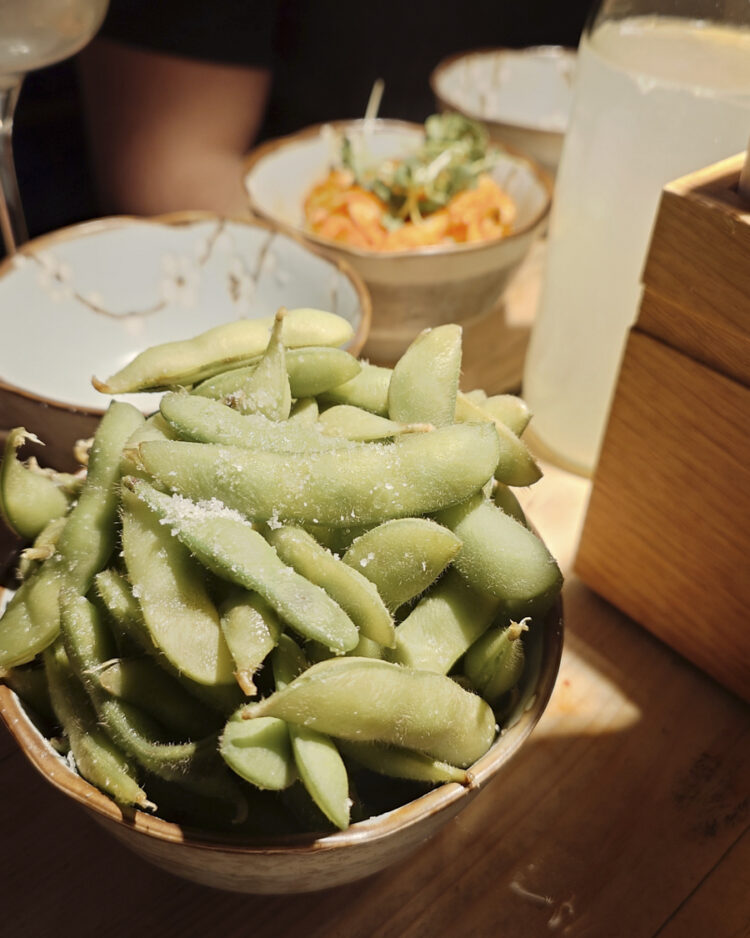

Ramen und ein paar Snacks in der Mochi Ramen Bar (1020) – wie immer top.
Gesehen
Mehr Eiskunstlauf bei Olympia (Alysa Liu absolute Ikone).
Gelesen
Das Dummy Magazin No 89 Wunder, das ich schon vor Wochen aus dem Briefkasten gefischt, aber nie aufgeschlagen hatte. Die Reportage über den rechtsextremen, Hundekot-DNA-erfassenden Bürgermeister von Béziers in Südfrankreich mochte ich besonders.
Gestrickt
Meine My Dream Cardigan (pattern von Wool & Beyond bei ravelry) ist endlich fertig! Die Perlmuttknöpfe schauen mehr nach maximalist 80s aus als nach minimalist 90s und verziehen außerdem die gerollte Kante des Bündchens, vielleicht muss ich sie daher bei Gelegenheit nochmal austauschen. Aber jetzt ist dieses Langzeitprojekt (im Juni 2025 angeschlagen?!) endlich tragbar.

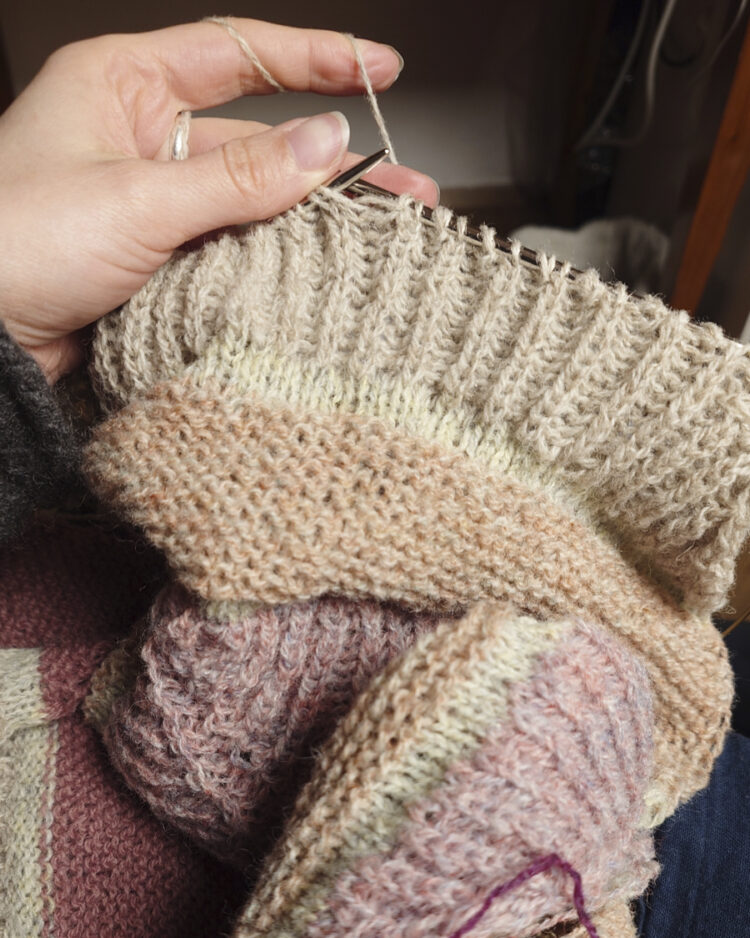
Weiter am Klimawandeltuch 2025 (s.a. Daten Stricken in der Klimakrise, ravelry) – ich bin endlich im November angekommen.
Veröffentlicht
Im Blog: Valentinstags-Schnitten
Anderswo: Einen leicht aktualisierten Text für die futurezone.at: Warum Birkenpollen-Allergiker meist Äpfel nicht vertragen (17.02.2026, ursprünglich im Februar 2025 erschienen).
Hier folgen meine liebsten Links der vergangenen Woche:
Rezepte
little black sesame pandas – @constellationinspiration
Dessertsuppe mit Panda-Klebreis-Bällchen zum chinesischen Neujahrsfest.
Eight Treasure Rice Pudding (Ba Bao Fan, 八宝饭) – Red House Spice
Dieses Klebreis-Dessert (schon wieder!) habe ich via Fuchsia Dunlop entdeckt.
Texte
The splinternet how online shutdowns are getting cheaper and easier to impose – The Guardian (via Anne Roth auf bsky)
So habe ich noch nie auf das Thema digitale Souveränität geschaut:
Governments worldwide, including in Europe, are promoting notions of sovereign data, sovereign AI and, in some cases, sovereign internet. Accompanying this is an ambition to nationalise infrastructure, for example to keep UK citizens’ health records stored in UK data centres. This is an understandable goal, given the increasingly authoritarian bent of US tech platforms that are the custodians of much of the world’s data.
But if fascist or authoritarian regimes ascend, such an approach risks replacing one set of despots with another. Iran’s ability to cut off its internet was prefigured by a years-long push to nationalise its underlying infrastructure. Shutdowns such as Iran’s become far easier when a country’s data is entirely accessible to its domestic authorities.
Das drohende Ende von Open-Source-Projekten durch LLMs am Beispiel von Tailwind CSS – Leitmedium
Auch darüber, wie schlecht KI für die Internet-Infrastruktur ist, habe ich noch kaum nachgedacht (beängstigend):
Das Versprechen der LLM-Anbieter lautet Effizienz. Der Preis dafür ist der Verlust der Bedingungen, unter denen Wissen, Software und Kultur überhaupt entstehen können. Wenn Dokumentationen nur noch als Trainingsmaterial dienen und nicht mehr als Orte der Auseinandersetzung, dann sterben nicht nur einzelne Projekte. Dann bricht eine ganze Form der Wissensorganisation weg. Am Ende verlieren alle: die Projekte, die ausbluten, und die Nutzenden, die sich über immer glattere Antworten freuen, bis es nichts Neues mehr gibt, das beantwortet werden könnte. Die Verweigerung von Tailwind CSS eine KI-optimierte Dokumentation zu liefern erscheint damit völlig folgerichtig. Auch wenn sich der Tailwind-Gründer nicht als genereller KI-Kritiker positioniert, leistet er an dieser Stelle Widerstand, weil es keinen Sinn macht, Texte auch noch freiwillig besser für “KI”s lesbar zu machen
Diffusion of Responsibility – tante
Noch ein bissl KI-(Bro-)Kritik (insbesondere ggü. OpenClaw):
And here we see another kind of diffusion of responsibility that the “AI” wave is creating: People just releasing whatever software they generated into the wild for others to run. Often with huge promises: OpenClaw “ACTUALLY DOES THINGS” as the website says. No “this is experimental”, “this is potentially dangerous”, “this code has not been checked by anyone and running it is the software equivalent of digging a half eaten kebap out of the trash can and eating it”.
Steinberger did not just generate some shit code for himself to do whatever. No: He needed to release it. And not for “inspiration” but for people to run it. He’s doing the “right-wing tech podcast tour” currently going on Lex Fridman’s horror show and talking to startups and whatnot. He wants something and it’s not really to inspire: It’s to be “the inventor” of OpenClaw. He wants the reputation boost you get from running a popular open source project whose name people might actually know. He wants to be important.
The Princess President of a Major VC Firm Wants a European AI Renaissance – Bloomberg
Tbh habe ich nur wegen dieses Titels („Princess President“??!) auf den Artikel geklickt. Was für eine Parallelwelt.
Venture capitalist Jeannette zu Fürstenberg says she felt like an outsider when she moved into academia from her family business in Germany. It was the same after she met her husband, Christian, a prince from the House of Fürstenberg, an 800-year-old royal clan. And now, she says, she gets a similar vibe when visiting Silicon Valley for her job with investment firm General Catalyst. “I never fully belonged to one circle,” she says, picking her way through the frigid streets of Davos, Switzerland, during the World Economic Forum in January.
This is difficult to believe. Tall, regal and fluent in five languages, zu Fürstenberg, 43, looks comfortable most anywhere. Davos suits her particularly well. Dressed in a shearling coat and powder-blue scarf on a sunny morning, she bounces in conversation from startup financing to Berlin politics to Russian literature.
chinese period of my life (a visit to China pt.1) – Spencer Chang
So viel wie ich z. Zt. über China lese, bin ich eindeutig auch schon in der chinese period of my life…
Because there’s so much technological advances, I assumed that human labor would be automated, too. Instead, I see people everywhere I look—human labor that has exploded to fill the gaps where the automation can’t reach.
So while you can order anything from an app, correcting any mistakes requires human support to call the involved stores to manually adjust. When you book train tickets on trip.com, your request goes to Chinese staff who call the relevant stations to book your ticket. You can find thousands of suppliers online, but the most important business is conducted through WeChat voice messages and over tea next to the factory.
These systems have a massive chain of dependencies that are rigid to a fault, which leaves it up to humans and manual interventions to change anything. In short, it all comes down to “knowing a guy.”
Anna Aslanyan Esperanto on Ice – London Review of Books
Random Fakten zum Olympia-Eiskunstlauf:
Kateřina Mrázková and Daniel Mrázek used an AI-generated song for their routine. While AI-generated music is permitted, it isn’t necessarily free to use. ‘If it includes or derives from copyrighted material,’ Robson said, ‘licences may still be needed. Purely original AI output can have unclear copyright status.’ AI models are, of course, never ‘purely original’: they are trained on works created by humans. The song used by Mrázková and Mrázek once had lyrics that were very similar to ‘You Get What You Give’ by the New Radicals; some of the new lines have previously been sung by Bon Jovi. Last year, when Universal settled its copyright lawsuit against the AI music generator Udio, the industry hailed it as a ‘win for musicians everywhere.
The reporter who tried to replace herself with a bot – Platformer
Weiter zum Thema KI-generiertes Zeug: Ella Markianos von Platformer hat versucht, sich selbst zu ersetzen.
While I enjoyed seeing my AI agent get better at my job, I don’t feel any desire to delegate my writing to it. I wouldn’t do it even if readers would accept it. As well as my AI mentee can now write, drafting is what I do to think. If I had Claude write my first drafts, even if I fact-checked them thoroughly, it would be a lot harder to tell whether the angle was my own view or the AI’s.
Still, I’ve decided to keep Claudella around. The bot excels at clip searches — looking for important quotes and analysis I might have missed. And I want to keep an eye on how quickly its skills improve.
And for me? The truth is that I’m less married to the idea of a career in journalism than I was at the beginning of this experiment.
Inside the Washington Post’s Existential Meltdown – New York Magazine
Egal wo man hinschaut, journalistische Jobs lösen sich in Luft auf (oder in dem Fall: werden einfach aufgelöst, Bezos Hochzeit hat ein Fünftel der Washington Post gekostet, als wärs nix).
The paper has tried out a new internal mission statement, “Riveting Storytelling for All of America,” to effectively replace the Trump 1.0–era motto “Democracy Dies in Darkness.” Bezos stunned the newsroom last year by remaking the ideology of the “Opinions” section “in support and defense” of “personal liberties and free markets” — a move that was interpreted as another sop to the Trump administration. “Opinions” editor Adam O’Neal essentially cleaned house upon arrival, turning the section into a MAGA-friendly libertarian outpost largely free of liberals and progressives. Some of the paper’s most-prized reporters and editors, having lost faith in the Post’s journalistic mission and business, left for rival publications, further damaging the paper. And as the latest round of layoffs loomed, Bezos hit Haute Couture Week in Paris, while the White House hosted a private screening of the documentary Melania — a movie Amazon spent $40 million to produce.
Gourmet Magazine Is Back, as Unsanctioned New Media – The New York Times (archive.ph ohne Paywall) (via Kottke)
Ok, ein paar nette News aus der Branche gibts auch noch. Bin sehr knapp davor, das zu abonnieren (auch wenn ich ~Newsletter~ immer noch nicht mag).
The new Gourmet joins a wave of worker-owned publications eschewing corporations such as Condé Nast, with journalists taking on more entrepreneurial roles as large media employers shrink or sell off. (Hell Gate, 404 Media and Defector also follow this model.) Contributors will be paid for the work they produce, plus a portion of profits from new subscriptions that their work attracts.
Founded in 1941, Gourmet magazine was one of several titles closed during the financial crisis. Edited by Ruth Reichl for its last decade, the magazine was more intellectual, worldly and elite than, say, Bon Appétit, its Condé cousin, which is still in circulation. It published David Foster Wallace’s famous essay “Consider the Lobster” and the Pulitzer Prize winner Annie Proulx’s first short story. James Beard was Gourmet’s restaurant critic for years.
In this spirit, the new founders dismissed questions about their immediate video or podcast plans. “Good writing is really cool,” said Nozlee Samadzadeh, a co-founder who is employed as a software engineer at The New York Times. “We’re going to see where we go after that.”
The new Gourmet’s recipes will also target more home-chef types than harried parents grasping for weeknight relief.
Looks Aren’t Everything? Clavicular Begs to Differ. – The New York Times (archive.ph ohne Paywall) (via User Mag)
Eine Online-Subkultur, über die ich vielleicht lieber gar nicht so viel hätte wissen wollen.
Her presence seemed to produce conflicting feelings in the famous streamer. On the one hand, Ms. Kirk was an attractive woman who demonstrated a keen interest in him. On the other hand, her use of the looksmaxxing vernacular struck him as unnatural. His was a subculture for abject men hoping to change their lives — not for women, who produced many of the feelings of inadequacy behind looksmaxxing in the first place.
“It’s a male space,” Clavicular said, having earlier pronounced of Ms. Kirk, “My culture is not a costume.”
Martenstein, Mario Barth und die Armee der Amazon-Rezensenten – Kultur und Kontroverse
Johannes Franzen über Harald Martenstein, der kürzlich das ZEIT-Magazin verlassen hat.
Die Tatsache, dass es unter „Zeit“-Leser:innen offenbar nichts Beliebteres gibt, als sich über das Gendern lustig zu machen, verweist auf den libidinösen Status dieses Ressentiments – die fast rauschhafte Freude an einer Verachtung, die sie sich mit den Fans von Mario Barth teilen. Diese Fans haben vielleicht nicht die 7000 Euro für eine Mekong-Flussreise parat, aber sicher die 35 Euro, die ein T-Shirt mit der Aufschrift „Ich gender nicht, ich habe einen Schulabschluss“ aus dem Barth-Fanshop kostet. Hier trifft Martensteins gediegener Anti-Intellektualismus (alle Menschen, die gendern, behauptet er im Interview, seien Journalisten, an der Uni oder in NGOs) auf die prollige Bildungsbeflissenheit eines Mario Barth („Ich habe einen Schulabschluss“). Es handelt sich um einen fast rührenden klassenübergreifenden Konsens, der sich im gemeinsamen befreiten Wiehern über die Absurdität der modernen Gesellschaft Bahn bricht.
If You Visit a Sex Worker, Consider Using Carrageenan Lube – Viruses Must Die
Anders als dieser Titel vermuten lässt, geht es in diesem Text um Forschungsethik. Entdeckt auf meiner Recherche zur fuzo-Meldung über die „Bier-Impfung“, entwickelt vom selben Forscher.
Here’s the relevant paragraph from my 2006 publication:
Some, but not all, carrageenan-containing over-the-counter sexual lubricant gels we tested were extremely effective for blocking the infectivity of an HPV16 reporter pseudovirus in vitro. These results raise the possibility that use of such lubricant products, or condoms lubricated with carrageenan-based gels, could block the sexual transmission of HPV. However, in the absence of clinical efficacy data, it would be inappropriate to recommend currently available products for use as topical microbicides.
After my recent experiences with vaccine beer, it makes me cringe to read my own words. I now realize it is highly appropriate to recommend that people consider using carrageenan lube as a possible way of defending themselves against HPV.
Cut Gems – LA Review of Books (via Web Curios)
Fotografie-Meta:
This was a mode of photography I had never really worked in—the photograph as a scientific tool, as data, as presumed fact. These final images are meant to function for visitors as a kind of microscope, a way for human eyes to perceive the depths of color, light, and eternity these gems contain but which are not visible by squinting into a display case. In digitally correcting lens aberration, physical damage, lighting effects, and white balance, however, these images become something else—an idealized photographic stand-in for the object, one that will potentially outlive and supplant the physical thing. One blue-green tourmaline I worked on was chewed up the side, missing small chunks from its upper edges. I did a cursory cleanup but left those chunks untouched. In the final image, that edge had been smoothed out, digitally restored. Treated in this way, the photographs begin to function editorially rather than scientifically. They start to resemble hyperreal food photography, or one of those “exposés” on retouching bodies in an unrealistic manner. The retouched image is a fantasy version, an idealized form that no longer represents a specific gem but an entire group, a perfect example of its type. It shifts from being a portrait of an individual specimen to a stock image.
Champagne bubbles the science – Knowable Magazine
Tolles Forschungsgebiet.
But the bubbles are also extremely important: Proteins in the wine, including ones from exploded dead yeast cells, stabilize smaller bubbles that make the desired “mousse” foam at the top of a champagne glass and a sharper pop in the mouth. According to the University of Melbourne’s Sigfredo Fuentes, most of an amateur’s impression of a sparkling wine comes from an unconscious assessment of the bubbles.
Recreating the smells of history – Knowable Magazine
Geruch ist so spannend (und Harold McGee’s Nose Dive steht immer noch ungelesen in meinem Regal).
The work at St. Paul’s Cathedral, which ended in 2016, suggested that it might be possible to capture far older scents — including smells from thousands of years ago. For a study published in 2025, Strlič was joined by scientists from Egypt, Slovenia, Poland and the United Kingdom to study nine ancient Egyptian mummies. The aim was to learn about the mummification process and recreate a scent that will be available to visitors of the Egyptian Museum in Cairo from 2026 onward.
One might expect the scent of millennia-old mummified bodies to be off-putting, to say the least. Yet the smell is surprisingly pleasant, “because the ancient Egyptians used so many aromatic compounds, oils and resins that a lot of the original smell still remains,” Strlič says.
Bären und Küken im Zahnarztstuhl. Über Streamingpflicht und geplante Entspannung – Leitmedium
Eine Alltagsbeobachtung, die gut ins Techniktagebuch passen würde.
Ich lege mich auf den Stuhl und blicke auf den nun seit vielen Jahren obligatorischen Bildschirm über mir. Es läuft eine Tierdokumentation. Fische jagen durch blaues Wasser, das man eigentlich nur aus solchen Dokumentationen kennt. Was ich denn sehen wolle, fragt die Assistentin. Ich könne sehen, was immer ich wolle. Sie hält mir eine Fernbedienung vor das Gesicht und wechselt hektisch durch das Netflix-Angebot. Filme, Serien, alles sei möglich. Sie scrollt durch die wahllosen Vorschläge, die der auf Personalisierung spezialisierte Algorithmus offenbar auf Basis der letzten Personen hier auf dieser Liege zusammengestellt hat. Harry Potter, Friends, Terminator. Ich bin ein wenig überfordert. Die Assistentin scheint unter Zeitdruck, ist aber sichtbar bemüht um meine Luxus-Erfahrung. Sie gibt mir die Fernbedienung in die Hand, fordert mich auf, eine Mundspülung zu benutzen und gibt mir zwei Minuten als Auswahlzeit. Während ich den leicht brennenden Minzgeschmack im Mund hin und her bewege, scrolle ich durch Netflix. Ich wähle eine Folge Brooklyn Nine-Nine aus und stelle die Sprache auf Englisch um. Während ich noch immer die Spülung im Mund habe, muss ich ein Lachen unterdrücken. Nein, das ist doch absurd, etwas Lustiges sehen und dabei eine Zahnprophylaxe bekommen.
What I Ate as an Unpaid Intern at Noma – A Food and Culture Namifesto
Die unterirdischen Arbeitsbedingungen im „besten“ Restaurant der Welt schlagen wieder Wellen, sehr gut (Arbeitsrechtsultra forever). Hoffentlich ändert sich was!
When a single restaurant cycles through 30 unpaid interns at a time in a three month period, and pigeonholes them to singular tasks for the entirety of that time, it becomes clear that their roles are less about being educated and more about utilizing their free labour to sustain profitability at the top. In such a system, those with the least power are asked to shoulder the cost of the work, while the business reaps the benefit.
Unpaid labour being normalized in an industry that is already mostly supported by minimum wage workers, shuts out those who cannot afford the smallest costs as well as those who are unable to make extreme sacrifices as I did just to participate.
While I do not regret the work I did, I regret contributing my efforts to an institution that seemingly so easily leveraged ambition against young workers such as myself who had not yet learned to protect themselves.
Audio/Video
BONAPARTE – Last Two Lovers
Ich habe in letzter Zeit erstaunlich oft (anderswo!) Bonaparte gehört, ich finde der Vibe passt zu diesem Februar.
Die Geschichte des ersten und letzten queeren Kinofilms der DDR – Coming Out – DLF Hörspiel und Feature
Dieser Film ist schon lange auf meiner Mubi-Watchlist, nach diesem Feature rückt er nach vorne.
Was kostete es, Ende der 1980er in der DDR den ersten DEFA-Film über schwule Liebe zu produzieren? Die Hauptdarsteller Dirk Kummer und Matthias Freihof erzählen, wie sie für „Coming Out“ ihre Karrieren riskierten.
Why Jeff Bezos gutted the Washington Post – The Guardian Full Story
Nochmal zum WaPo-Desaster:
Hundreds of jobs have gone at the newspaper that broke the Watergate scandal. Was profit or politics behind the decision? Jeremy Barr reports.
Reporting on a corrupt president made the Washington Post a global sensation with Watergate – and the masthead became a byword for fearless reporting. But last week the news organisation axed about 400 jobs, with some reporters discovering they were being laid off while still in war zones.
Media organisations face tough times with falls in advertising revenues and search traffic, and making cuts is not necessarily surprising. But with Jeff Bezos having bought the company, buying the rights to The Apprentice and making a lavishly produced documentary with Melania Trump, critics are asking whether politics, not profits, are really behind the move.
Daniela Stockmann and Ting Luo, „Governing Digital China“ (Cambridge UP, 2025) – New Books Network
Das Thema Plattformisierung lässt mich auch zwei Jahre nach meinem MA-Abschluss nicht los.
China’s approach to digital governance has gained global influence, often evoking Orwellian ‚Big Brother‘ comparisons. Governing Digital China (Cambridge UP, 2025) challenges this perception, arguing that China’s approach is radically different in practice. This book explores the logic of popular corporatism, highlighting the bottom-up influences of China’s largest platform firms and its citizens. Drawing on extensive fieldwork and nationally representative surveys, the authors track governance of social media and commercial social credit ratings during both the Hu Jintao and Xi Jinping eras. Their findings reveal how Chinese tech companies such as Tencent, Sina, Baidu, and Alibaba, have become consultants and insiders to the state, thus forming a state-company partnership. Meanwhile, citizens voluntarily produce data, incentivizing platform firms to cater to their needs and motivating resistance by platforms. Authors Daniela Stockmann and Ting Luo unveil the intricate mechanisms linking the state, platform firms, and citizens in the digital governance of authoritarian states.
Yi-Ling Liu, „The Wall Dancers Searching for Freedom and Connection on the Chinese Internet“ (Knopf, 2026) – New Books Network
Und nochmal chinesisches Internet.
Not too long ago, in the 2000s and 2010s, many felt that the internet–even one behind the Great Firewall–would bring about a more open China. As President Bill Clinton famously quipped in 2000, Beijing trying to control the internet would be like “trying to nail jello to the wall.”
Things don’t look quite so certain now. China’s internet is now more controlled than it was a decade ago, with platforms, content creators, and tech companies now firmly guided by rules and signals from Beijing.
Sonst So
Color Game — How Well Can You Remember Colors? (via Web Curios)
Dieses Mini-Browser-Game macht mir unüblich große Freude (und: 46.43 / 50 Punkte im ersten Versuch??).
Current – Terry Godier
Ein RSS-Reader mit neuem Konzept (leider nur für iOS, also nix für mich).
PHOTO ESSAY Invisible infrared surveillance technology and those caught in its digital cage – AP
Nach Wärmebildfotografie vergangene Woche nun Infrarot-Fotografie. Überwachungs-Dystopie.
When you unlock a phone, step into view of a security camera or drive past a license plate reader at night, beams of infrared light – invisible to the naked eye — shine onto the unique contours of your face, your body, your license plate lettering. Those infrared beams allow cameras to pick out and recognize individual human beings.
What’s Your Attention Worth? The Ad Spend Calculator (via Web Curios)
Ich habe absolut keine Ahnung, wie nah dieser Schätzwert an der Realität ist, aber allein als Gedankenspiel finde ich diese Seite interessant.
Karol sweater – lowkey.bold.knit – ravelry.com
Crazy Strick-Struktur!
Euphoria Raglan Sweater – Popknit
Das Strickmuster gibts derzeit nur auf Dänisch, aber bis ich dazukäme, diesen sehr cool strukturierten Pulli anzuschlagen, ist es bestimmt schon übersetzt.
Backkatalog







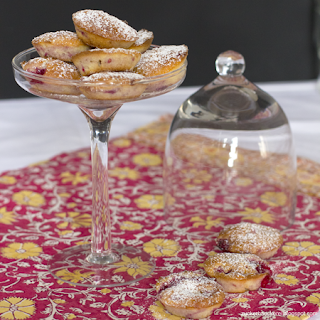


- 2025:Vanille-Cupcakes mit Orangenkaramell und Blutorangen-Frischkäse-Frosting
- 2024: Brandteiggebäck mit Rosenwassercreme, Himbeeren und weißer Bittermandel-Ganache
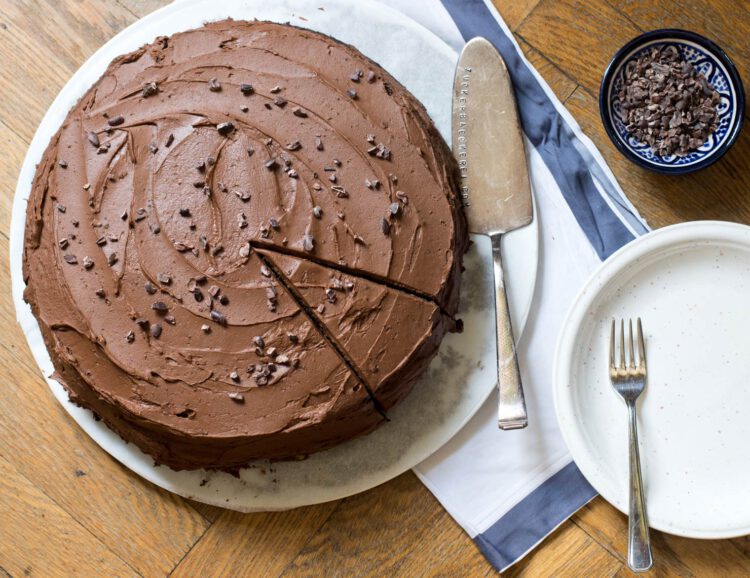
- 2023: Ein-Topf-Schokotorte mit Ganache und Beerenmarmelade
- 2022:Matcha-Erdbeer-Cookies
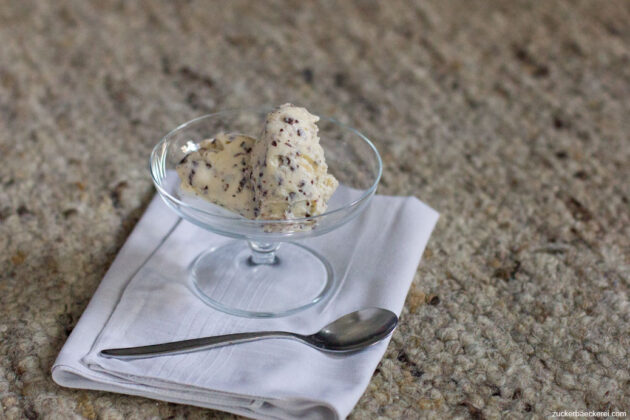
- 2021: Buttermilch-Stracciatella-Eis
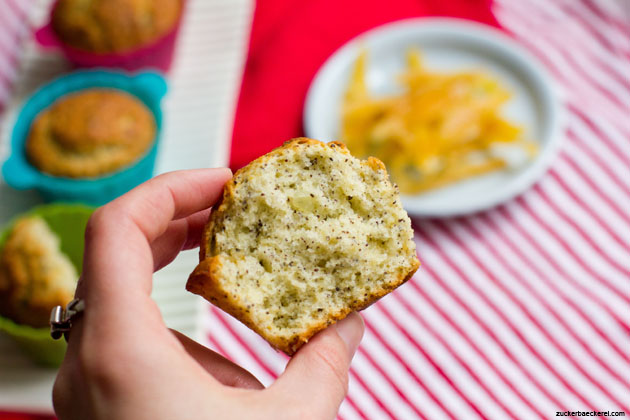
- 2020: Mohnmuffins mit Kandierter Zitrone
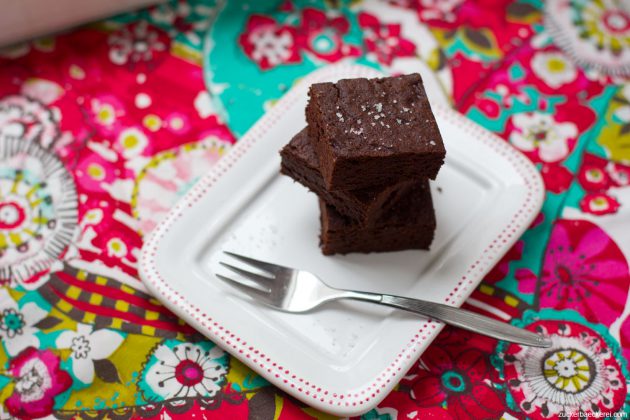
- 2019: Fudgy Brownies
- 2018: Zuckersüß 276
- 2017: Mousse au chocolat
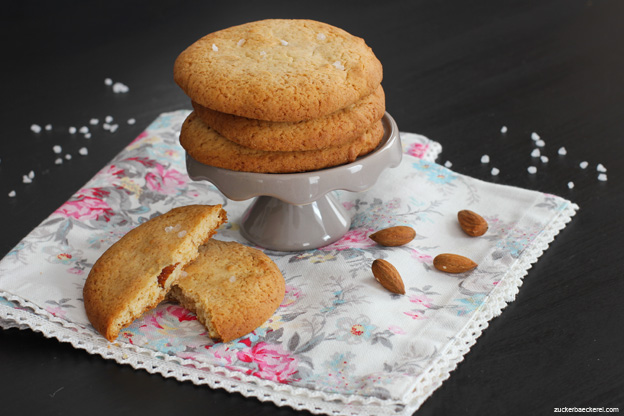
- 2016: Honig-Mandel-Kekse
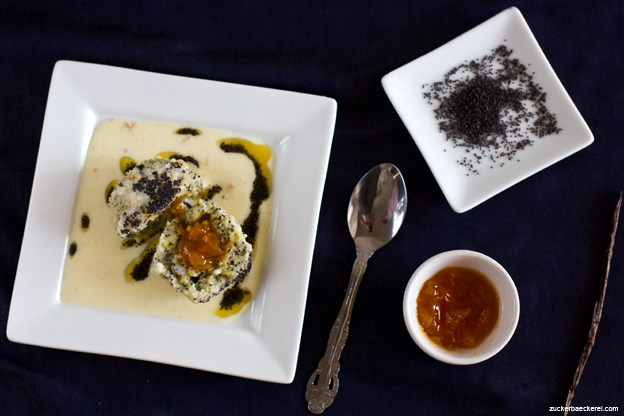
- 2015: Mohnknödel mit Aprikosenfüllung und Vanillesauce
- 2014: Hafer-Erdnusskekse mit Schokoüberzug und Granatapfelsalz
- 2013: Mini-Schokoguglhupfs
- 2012: Himbeer-Kokos-Muffins
- 2011: Schokoeulen-Cakepops
- 2010: Orangenschokospritzgebäck
 Hi, ich bin Jana. Seit 2009 veröffentliche ich hier wöchentlich Rezepte, Reiseberichte, Restaurantempfehlungen (meistens in Wien), Linktipps und alles, was ich sonst noch spannend finde. Ich arbeite als Redakteurin bei futurezone.at, als freie Audio-/Kulinarikjournalistin und Sketchnoterin. Lies mehr über mich und die Zuckerbäckerei auf der

 Über den Tellerrand
 Bücher
 Zuckersüß