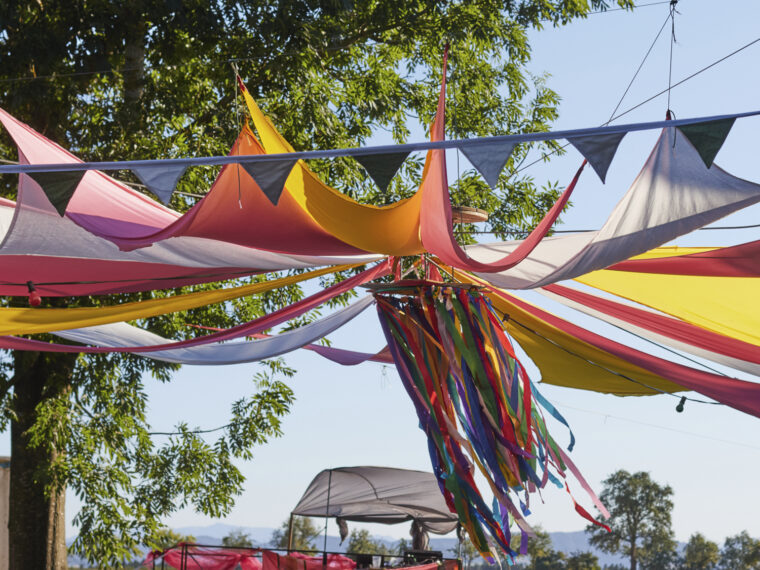
…mit wenig Gebackenem, zwei Lokalen (bruder, Saint George), einer Gurkerl-Party, einem Buch (Caliban and the Witch), einem Film (Charlie und die Schokoladenfabrik), je einem Strick-, Näh- und Klöppelprojekt (Seidentop, Handtasche, Snowflake) – und wie immer, meinen liebsten Links der vergangenen Woche.
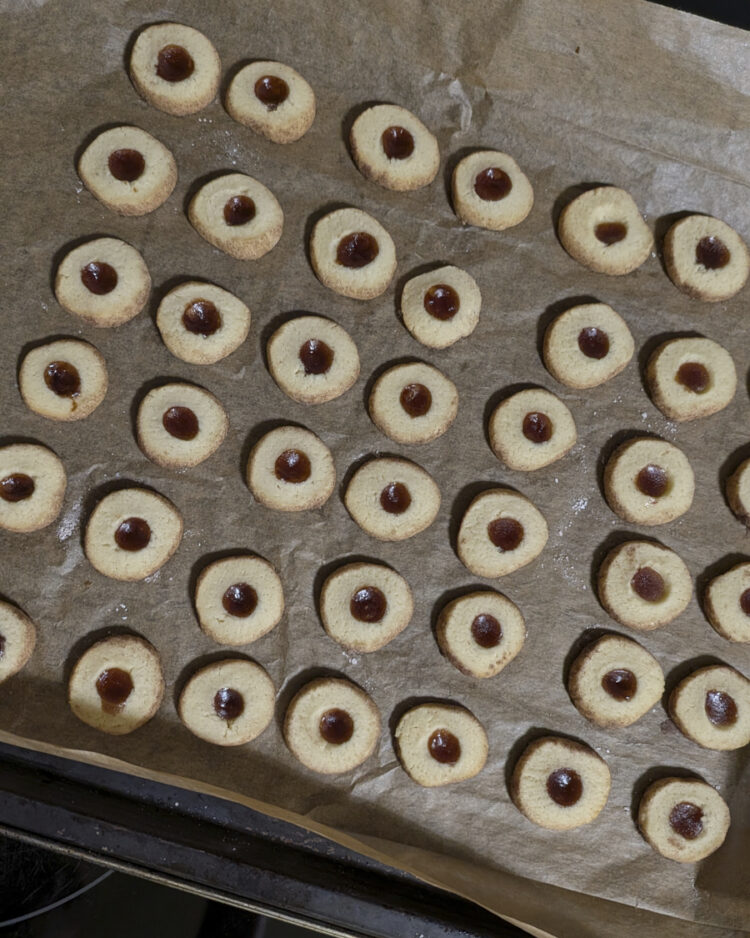
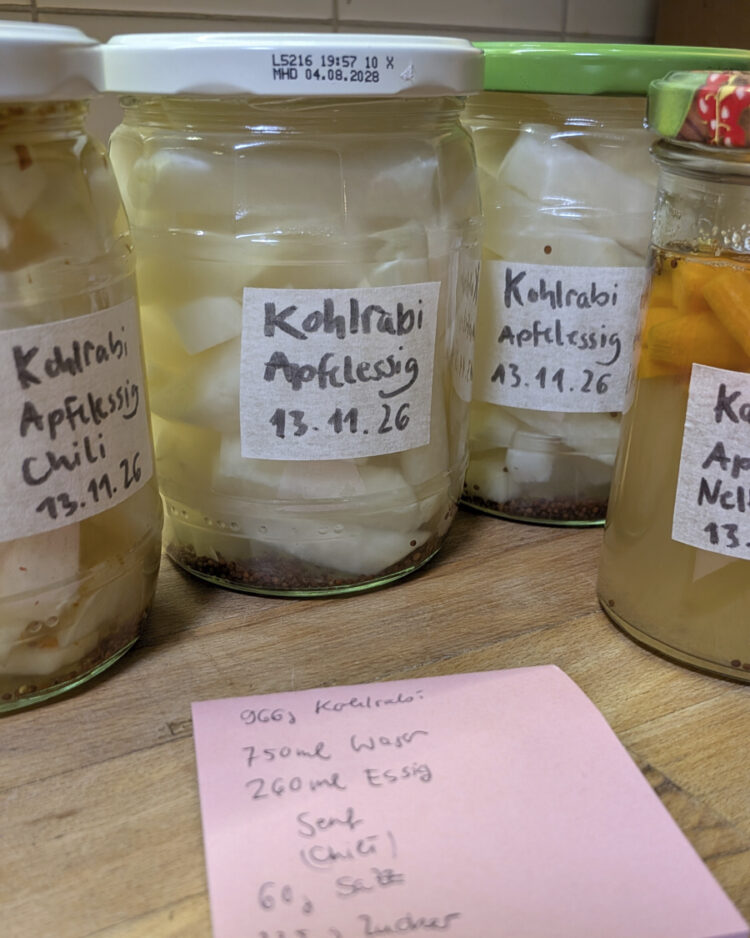
Seit dem letzten Zuckersüß habe ich Hirschknöpf (s. Rezept von 2009 / 2011) gebacken und Kohlrabi in selbstgemachtem Apfelessig eingekocht.
Gegessen
Gemüsesuppe mit Grießnockerln und Pak Choi. Gemüsesuppe mit Nudeln. Kartoffelgratin mit Erbsenpüree. Schoko-Grießpudding mit Amlou, Ahornsirup und Mandeln.
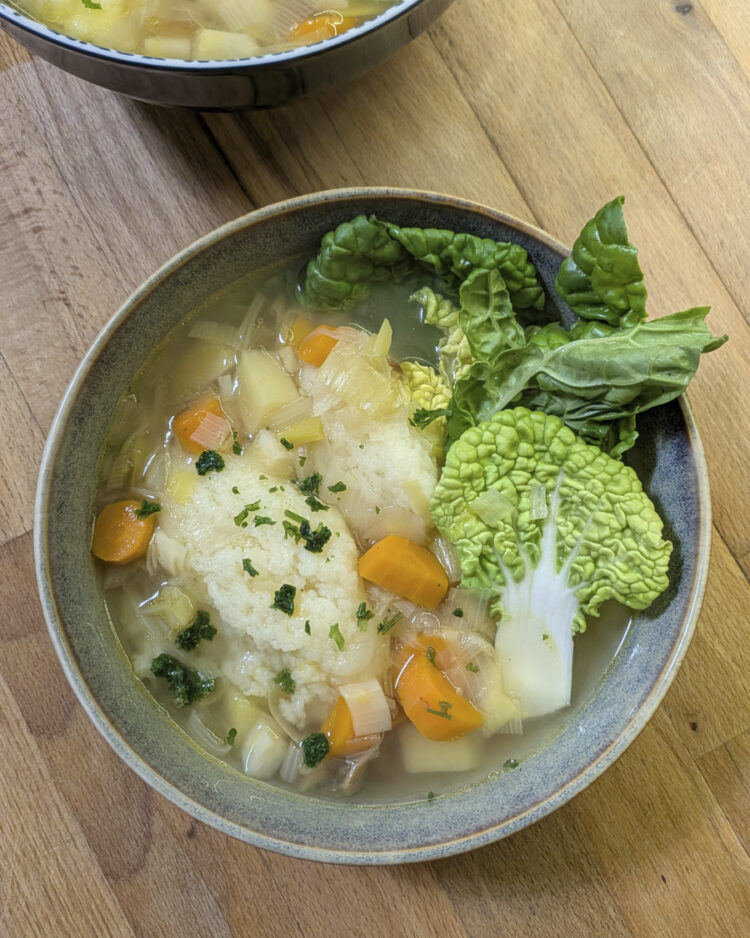
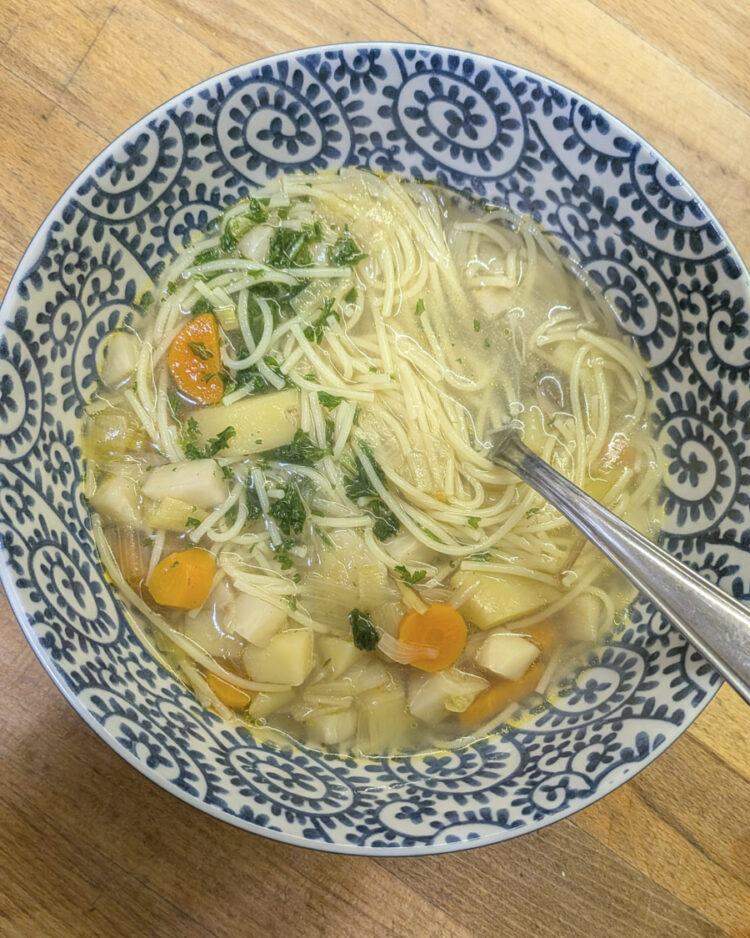
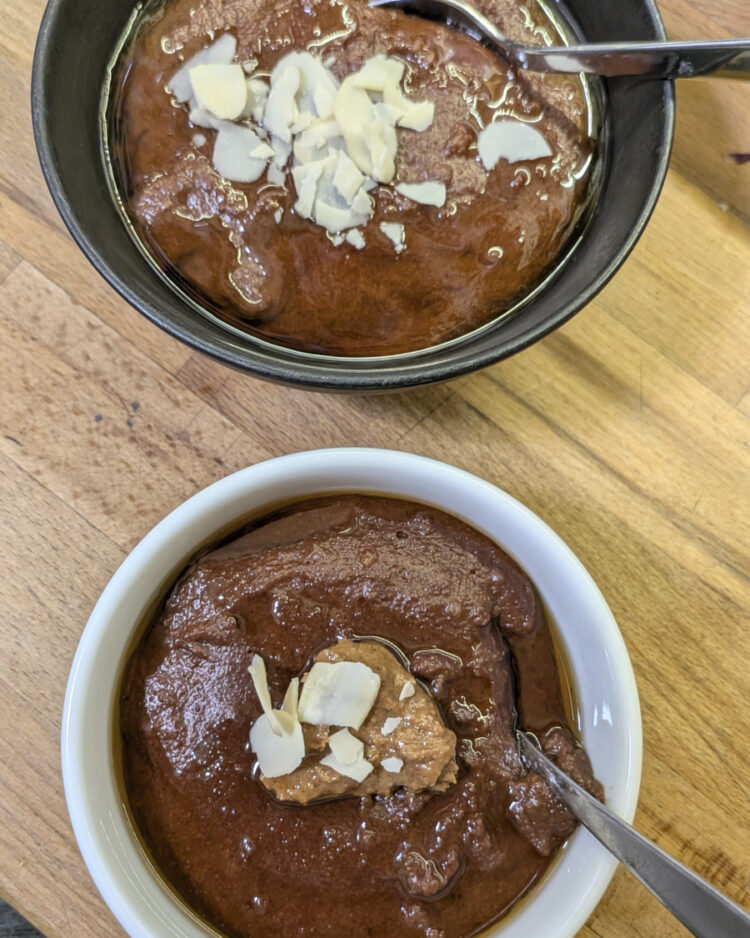
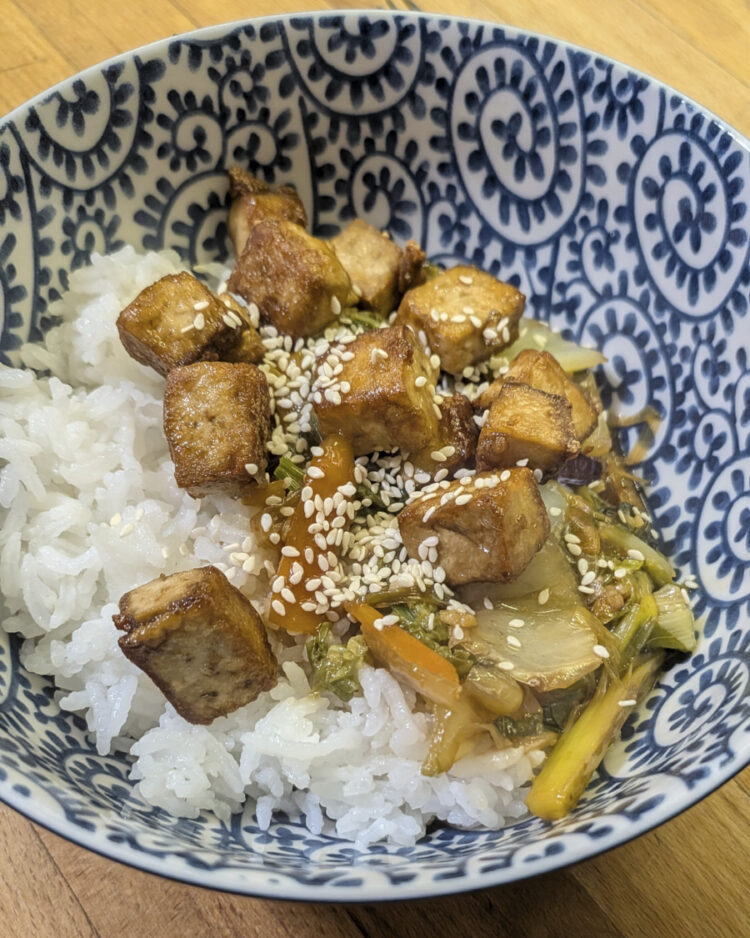
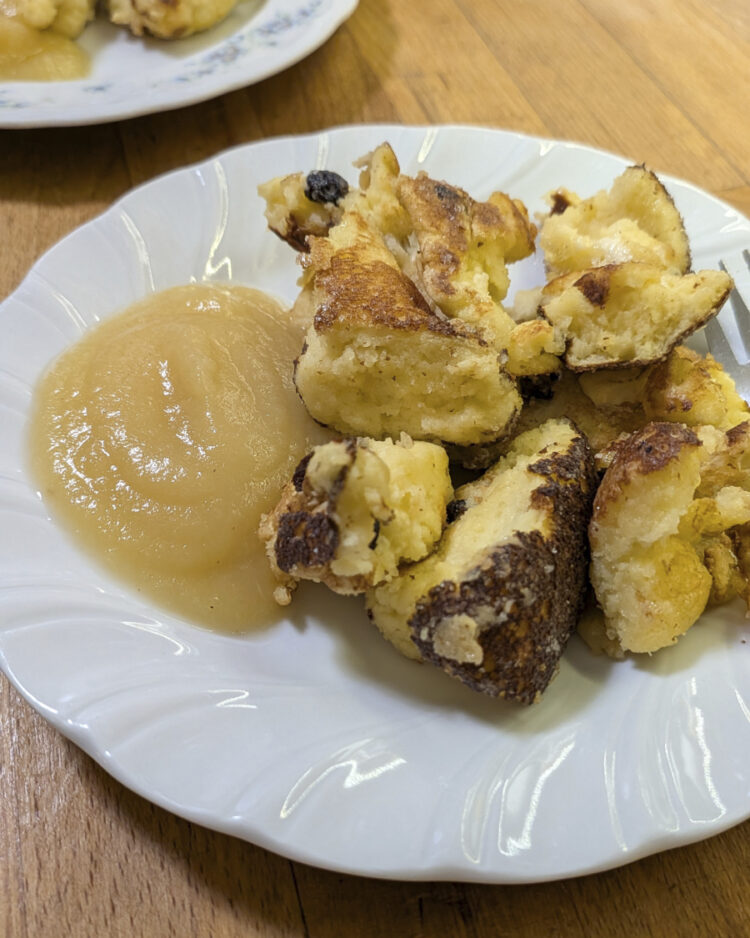
Reis mit Gemüse-Stir-Fry und knusprigen Tofuwürfeln. Kaiserschmarrn. Gebratener Reis mit Ei, dazu Chinakohlsalat.
Gurkerl-Party
Ich bin der festen Überzeugung, dass Parties (und das meine ich im weitesten Sinne) die Welt zu einem besseren Ort machen. Menschen, die sich die Mühe machen, etwas auf die Beine zu stellen und dadurch Leute zusammenbringen, haben daher fast automatisch meinen vollsten Respekt. Dieses Wochenende war ich auf einem Fest – oder war es eher eine Kunstaktion? – eingeladen, in das so viel Begeisterung geflossen ist, dass man sich wohl Jahre später noch davon erzählen wird. Und von der Hingabe der Veranstalter für ihr zu 1000 Prozent durchgezogenes Motto will ich mir gern etwas abschauen: Schon die Einladung war ganz und gar außergewöhnlich. Sie kam per Post, handgeschrieben und -gezeichnet und mit Siegel, komplett auf Latein.
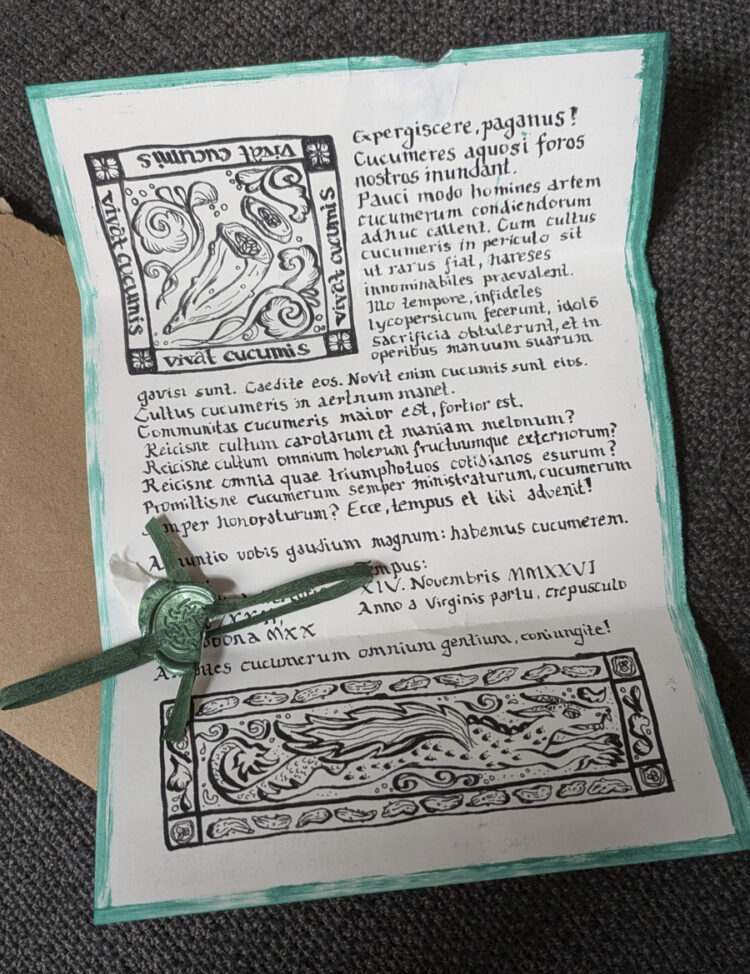
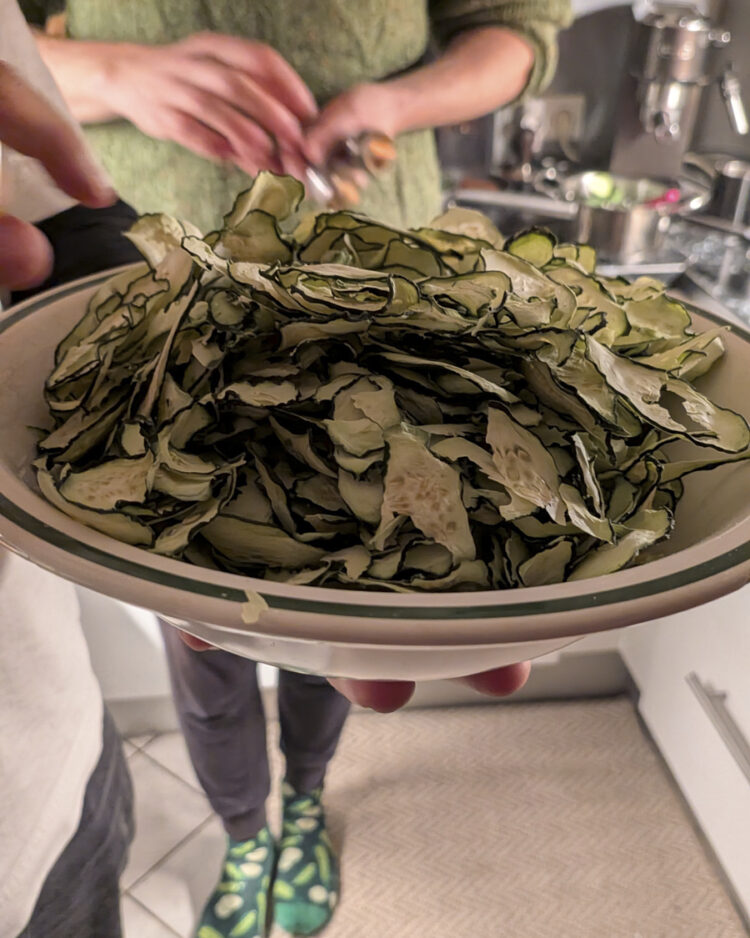
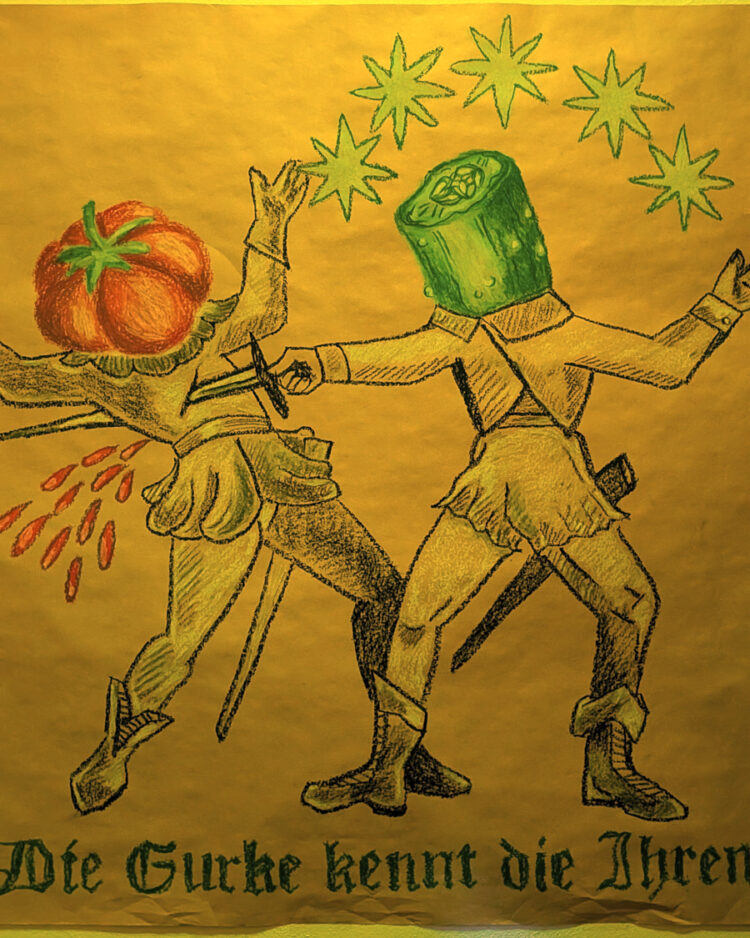
Ich packte ein Glas meiner Gurkerl in selbstgemachtem Apfelessig als Gastgeschenk ein, und wusste nicht recht, auf was ich mich einlassen würde. Am Eingang: Gurken-„Hostien“ und Gurkensaft aus kleinen Silberkelchen zur Begrüßung. In allen Türrahmen und an den Lampen Essiggurkerl-„Vorhänge“. An den Wänden handgezeichnete Gurken-Gemälde, Essiggurkerl aller Art zum Durchprobieren, gedörrte Gurken mit Bärlauchsalz statt Kartoffelchips. Prosecco mit Gurkensaft oder Gin Tonic mit Gurken. Ein Gurkenlied auf der Hammond-Orgel zum Mitsingen für alle, eine Zeremonie (Mini-Theaterstück?) zur Ehre der mächtigen Gurke. Personalisierte Gurkerl-Club-Ausweise für alle Anwesenden usw. usw. Wow!
Bruder
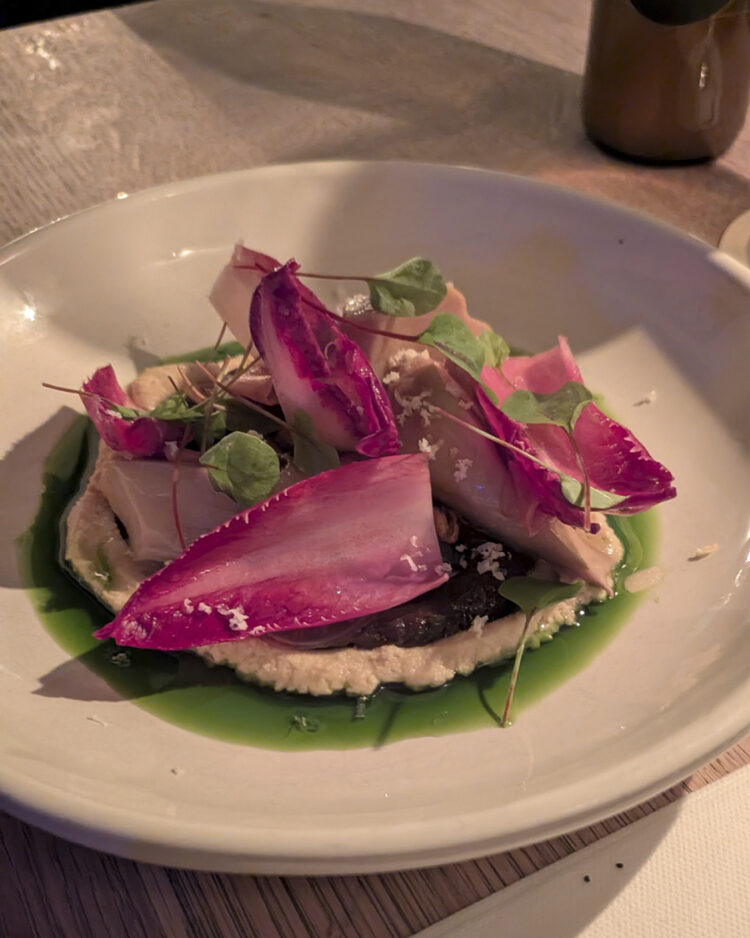
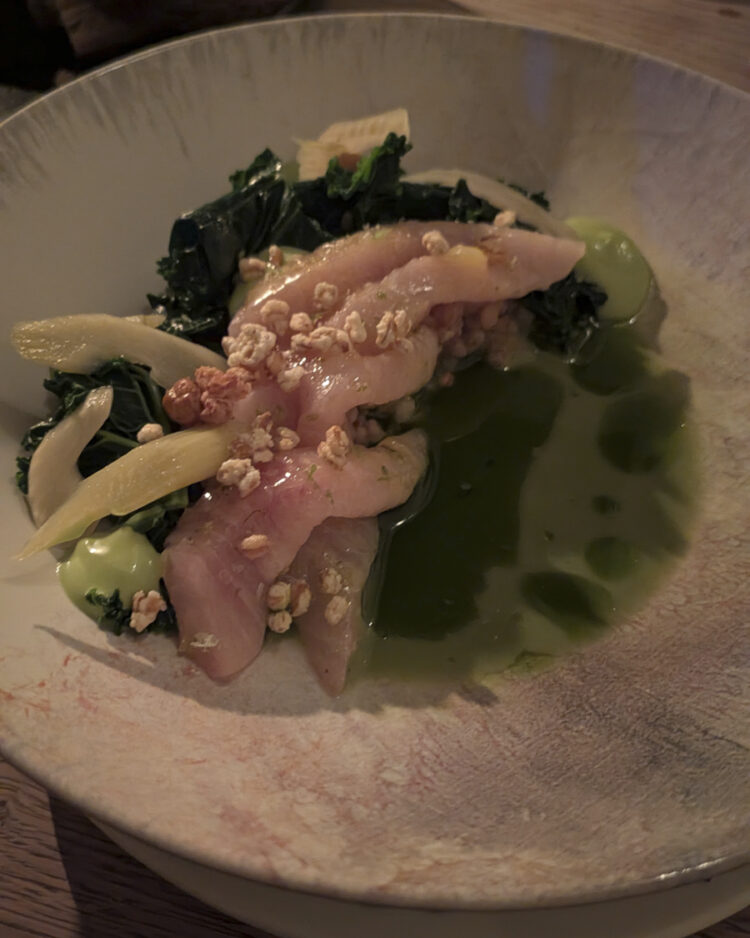
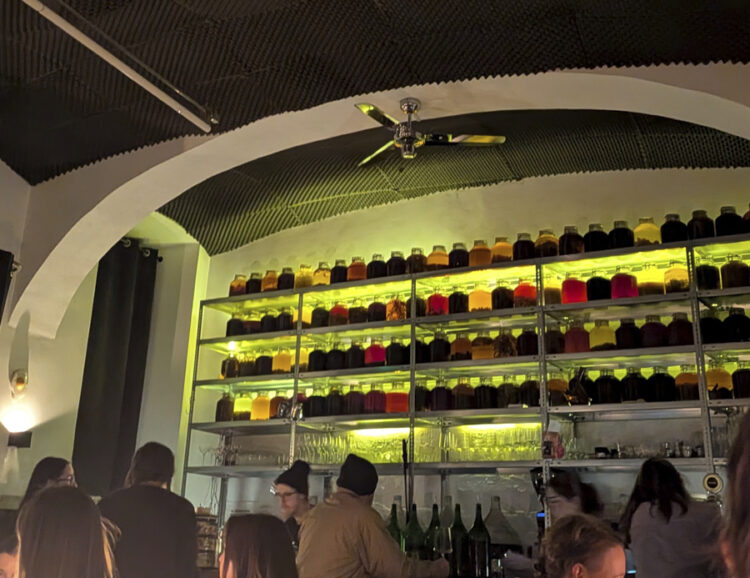
Ich war endlich mal wieder im bruder (1060) und SEHR begeistert. Vor allem die Vorspeisen haben es mir angetan, Herbst küsst Seele fand ich quasi perfekt: Hummus, konfierte Kräuterseitlinge, eingelegte Zwetschgen, eingekochte Zwetschgen, Radicchio, Kren und grünes Öl (war es Feigenblatt?). Nur ganz knapp dahinter: Ganz schön durcheinander, Kühler Saibling auf gepufftem Amaranth, gedünstetem Grünkohl, Buttermilch, Feige und Feigenblattöl. Ich hoffe, ich komm dazu, auch noch über den Rest zu schreiben.
Saint George Bar
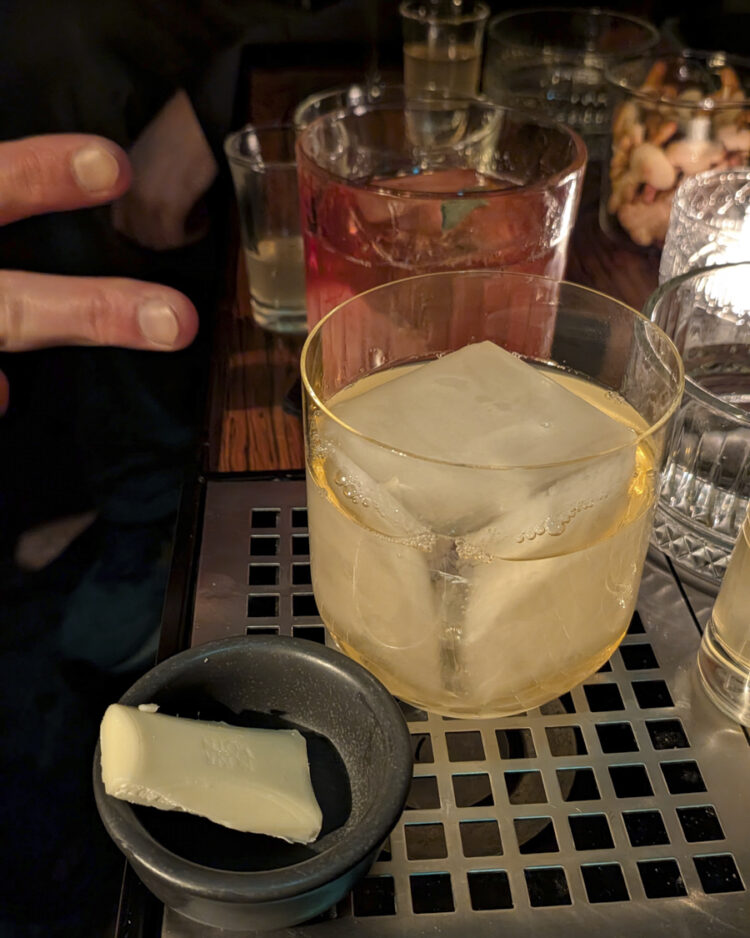
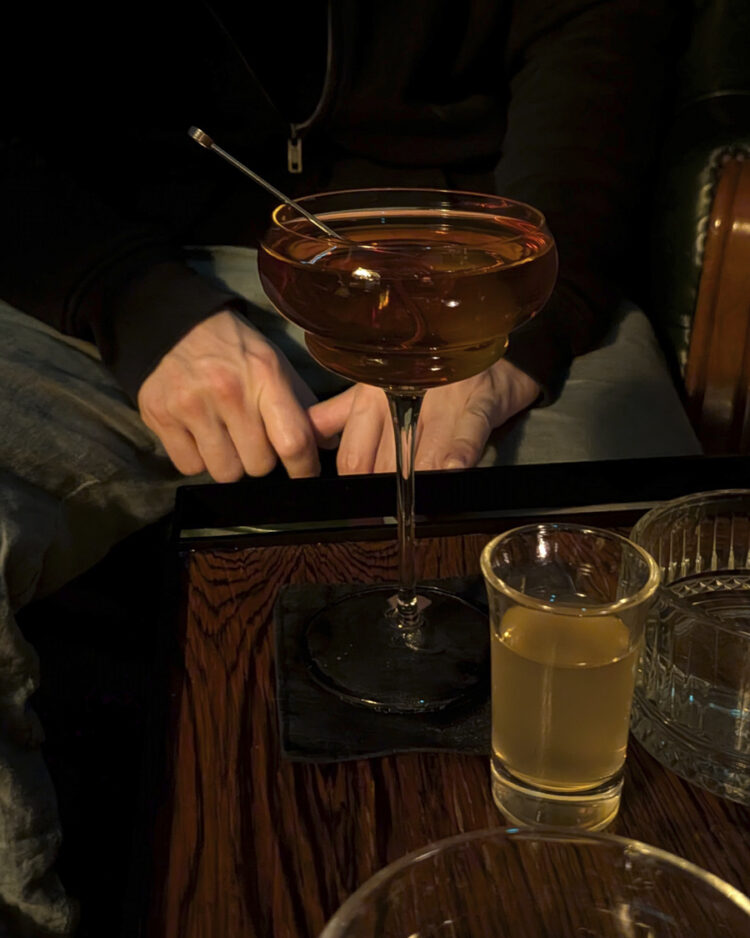
Auch in der Saint George Bar (1070) war ich schon lange nimmer (s. Zuckersüß 483). Ich finde sie immer noch enorm gemütlich und die Karte der Signature Drinks scheint mir sogar noch ein bisschen verrückter geworden zu sein. Der Fokus liegt nun bei ziemlich umami-lastigen Geschmäckern. Ich hatte einen alkohlfreien Matcha-Matchy Punch (10,50€), der dank geklärtem griechischen Joghurt eine faszinierend volle Textur hatte. Neben Matcha waren auch noch allerlei andere Kräuter drin, ich erinnere mich leider nicht genau. Nebenbei gabs ein Stück weißer Schokolade, die für noch mehr Cremigkeit auf der Zunge sorgte. Einer meiner Begleiter entschied sich für den Espresso Martini in der Hausvariante (14€), der kam ganz ohne Kaffee aus, stattdessen gabs Kahlua, Sojasauce und eine Olive. Zusätzlich bekamen wir je einen fruchtigen Willkommensshot mit Ouzo und dann auch noch einen zweiten in anderer Rezeptur aufs Haus.
Gelesen

Aus einer Laune heraus habe ich Silvia Federicis Caliban and the Witch wieder in die Hand genommen, an dem ich mir schon bald zwei Jahre lang die Zähne ausbeiße (s. Zuckersüß 491). Es ist wirklich keine einfache Lektüre, und zusätzlich noch ziemlich verworren und stellenweise seltsam redundant. Und es hat maximal unübersichtliche Endnoten (warum nicht einfach Fußnoten, was ist mit den Verlagen?). Aber egal.
Federicis Hauptargument: Die Hexenverbrennungen haben den Grundstein für die systematische Ausbeutung von Frauen und kolonialisierten Völkern gelegt und dadurch Kapitalismus überhaupt erst möglich gemacht. Sie interpretiert Hexenverbrennungen als staatliche Reaktion auf (weiblich geführte) Proteste gegen die Entmachtung der Landbevölkerung:
For the unleashing of a campaign of terror against women, unmatched by any other persecution, weakened the resistance of the European peasantry to the assault launched against it by the gentry and the state, at a time when the peasant community was already disintegrating under the combined impact of land privatization, increased taxation, and the extension of state control over every aspect of social life. The witchhunt deepened the divisions between women and men, teaching men to fear the power of women, and destroyed a universe of practices, beliefs, and social subjects whose existence was incompatible with the capitalist work discipline, thus redefining the main elements of social reproduction. In this sense, like the conemporary attack on ‚popular culture,‘ and the ‚Great Confinement‘ of paupers and vagabonds in work-houses and correction houses, the witchhunt was an essential aspect of primitive accumulation and the ‚transition‘ to capitalism.
Silvia Federici: Caliban and the Witch, p. 176
Bei folgender Randnotiz horchte ich auf:
In an era that was beginning to worship reason and to dissociate the human from the corporeal, animals, too, were subjected to a drastic devaluation – reduced to mere brutes, teh ultimate ‚Other‘ – perennial symbol of the worst human insticts. […] But the surplus of animal presences in the wiches‘ lives also suggests that women were at a (slippery) crossroad between men and animals, and that not only female sexuality, but femininity as such, was akin to animality. To seal this equation, witches were often accused of shifting their shape and morphing into animals, while the most commonly cited familiar was the toad, which as asymbol of the vagina synthesized sexuality, bestiality, femininity and evil.
Silvia Federici: Caliban and the Witch, p. 215-216


Denn die Verbindung von Weiblichkeit und Kröten ist mir schon einmal untergekommen, und zwar in der Ausstellung Hamburg und Tirol – eine Alpenfreundschaft im MARKK Hamburg im Herbst 2024 (s. Zuckersüß 489). Dort waren sogenannte Mutterkugeln ausgestellt – stachelig und teils krötenförmig, die bei Gebärmutterleiden, Unfruchtbarkeit oder nach schwierigen Geburten in Wallfahrtskirchen gebracht wurden.
Gesehen
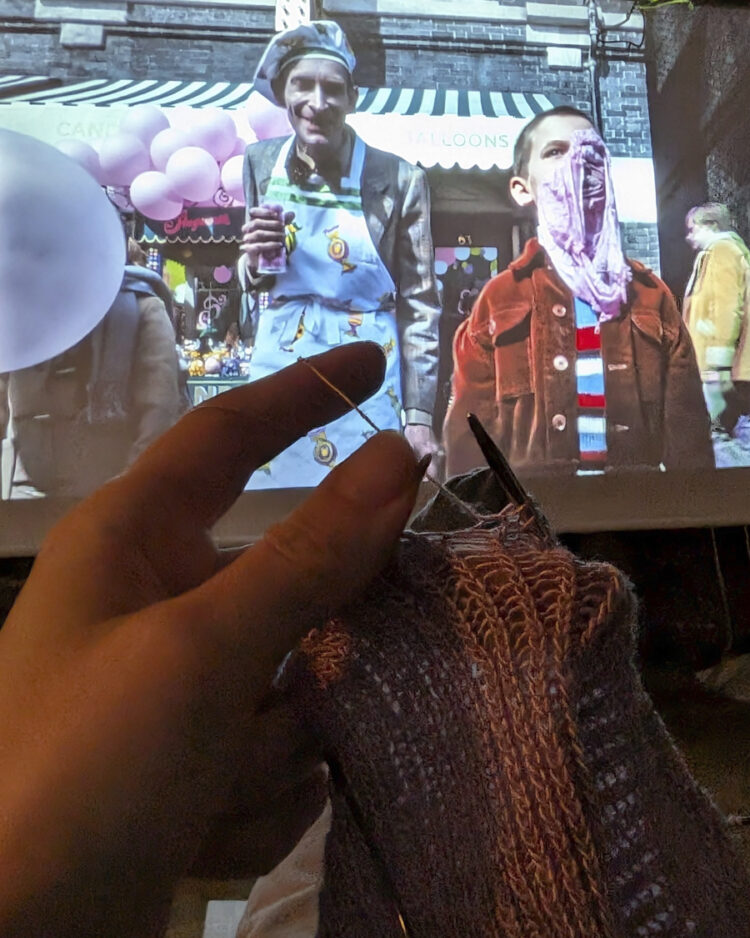
Charlie und die Schokoladenfabrik habe ich schon ziemlich oft gesehen, aber mir ist nun zum ersten Mal aufgefallen, wie super die Kostüme eigentlich sind – und wie viel Strick da im Spiel war. Ein schöner Film für dunkle Novembertage.
Gestrickt, genäht und geklöppelt
Weiter an meinem Seidentop gestrickt. Weiter an meiner Handtasche genäht, die ich jetzt als „vorerst fertig“ einstufen würde, nachdem ich wichtige Details ergänzt habe: Innentaschen, ein Verschluss mit Druckknopf, ein Ripsband über den schiachen Innennähten, Druckknöpfe für den Träger.
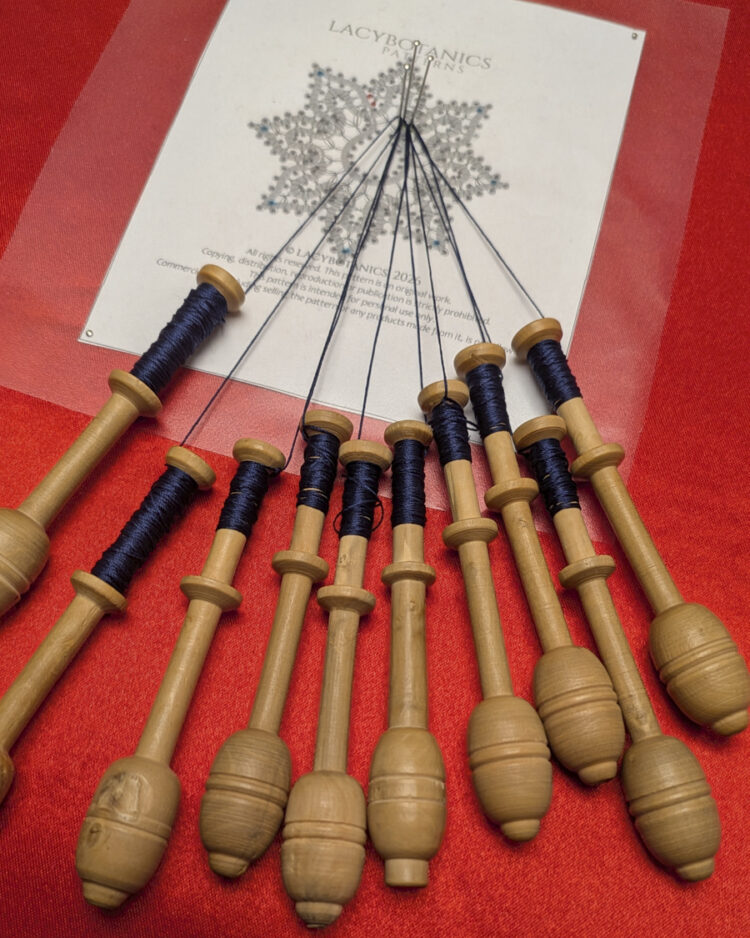
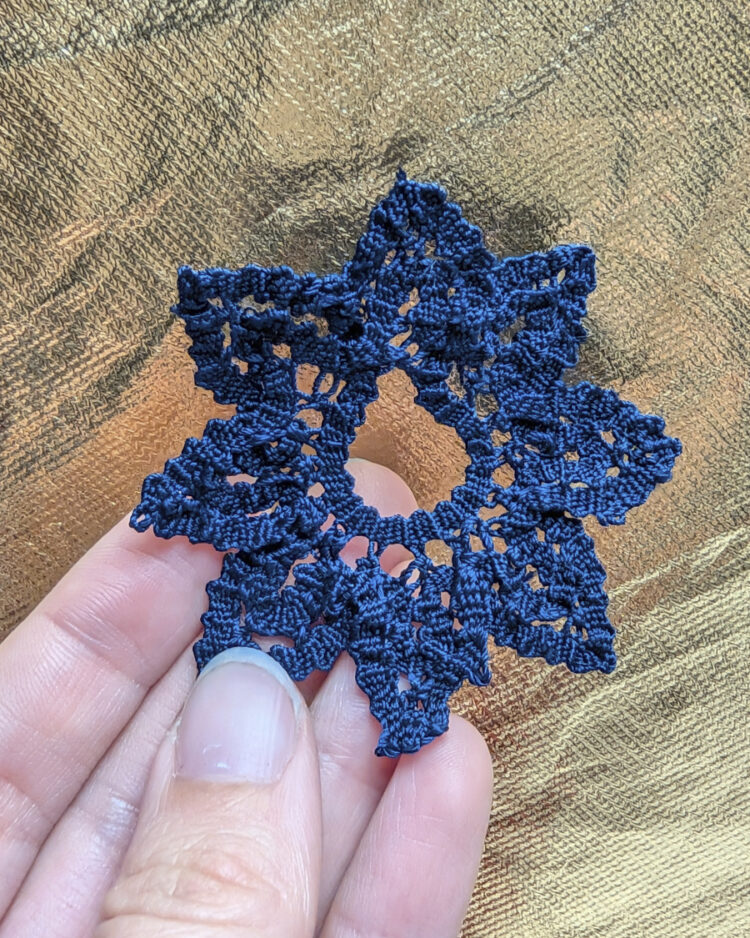
Ich habe mich an mein erstes „größeres“ Klöppelprojekt gewagt, und mir auf eine Empfehlung im Klöppel-Reddit hin das Pattern für das Snowflake Ornament von Lacy Botanics (10€, ganz schön teuer!) gekauft. Die Anleitung ist wirklich anfängerinnengeeignet, und anders als mit den Anweisungen im fast 40 Jahre alten Klöppelbuch (s. Zuckersüß 538) war ich an keiner Stelle verloren. Es fasziniert mich, *wie* meditativ das Klöppeln für mich ist (noch viel mehr als z. B. Stricken!), und wie unendlich zeitaufwändig. In den paar Quadratzentimetern Schneeflocke stecken wohl 30+ Stunden Arbeit (ich habe nicht mitgestoppt) – ich glaub ich muss mal wieder ins KHM gehen, Klöppelkrägen in alten Gemälden bewundern und völlig mindblown sein.
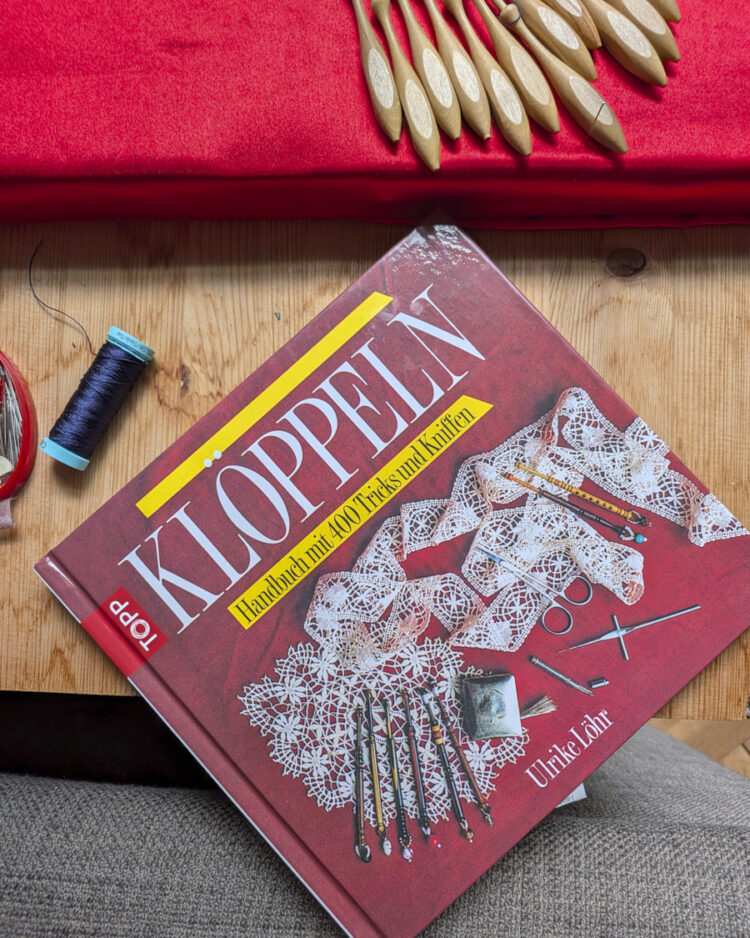
Abgesehen von meinen kleinen Übungsstückchen ist mir aber leider immer noch kein richtiger Use Case für meine Klöppeleien eingefallen. Viele (junge) Menschen, die dieses jahrhundertealte Handwerk hobbymäßig betreiben, betonen auf Social Media, explizit nichts „Nützliches“ herstellen zu wollen. Nachdem ich mir mittlerweile meine halbe Garderobe gestrickt/gehäkelt/genäht habe, finde ich diesen Ansatz wenig zufriedenstellend. Gleichzeitig sehe ich mich halt auch nicht mit Spitzenkragen oder -Ärmelbesätzen, und auch nicht mit geklöppeltem Schmuck durch meinen 21.-Jahrhundert-Alltag wandeln. Meine beste Idee ist noch ein Ballkleid damit auszustatten, aber das müsste ich auch erstmal nähen..?
Veröffentlicht
Im Blog: Scones mit Clotted Cream und Rosen-Kirsch-Marmelade
Anderswo: nix.
Hier folgen meine liebsten Links der vergangenen Woche:
Rezepte
Viral Nori Pasta (Roasted Seaweed Pasta) – i am a foodblog
Dass diese Nudeln viral gegangen sind, ist gänzlich an mir vorbeigegangen. Aber Carbonara mit Nori statt Guanciale kann ich mir schon gut vorstellen!
Cranberry Meringue Pie – Buttermilk by Sam
Bald ist Thanksgiving, die US-amerikanische Obsession mit Cranberries ist wieder da. So einen Pie würd ich gern mal ausprobieren, Thanksgiving hin oder her.
Turn Rotting Bananas into Black Sesame Banana Buns – Cake Zine
Ich muss es mal schaffen, Bananen so matschig werden zu lassen…
Texte
An interactive introduction to the terrific experience of rendering Arabic typography and its technical debt – Vita Nuova (via Tim Bray)
Dieser sehr technische, interaktive Longread, zur Schwierigkeit, arabische Schrift im Browser darzustellen, hat mich in dieser Woche sehr fasziniert, und nebenbei habe ich sehr viel über Kalligraphie gelernt.
Before shaping engines existed, the 8-bit code pages of the DOS and early Windows era encoded the shapes themselves: a separate character for initial ʿayn, medial ʿayn, and so on. Unicode, which promised round-trip compatibility with anything else, had to swallow those sets whole, and they live on at U+FB50 through U+FEFF under the name Arabic Presentation Forms: several hundred codepoints that no new document should ever contain and that PDF text extractors merrily emit to this day, which is one of the reasons searching an Arabic PDF so often fails in silence. The haystack is encoded as shapes and your needle is encoded as letters. My favourite resident of the block, and one of my favourite characters in all of Unicode, is U+FDFD, ﷽ : four-word invocation, bismillāh ar-raḥmān ar-raḥīm, as a single codepoint. A monument from the era when rendering was baked into the encoding because nobody trusted the renderer to do anything, preserved forever, like a fly in amber that recites.
AI models cost more when you don’t use English – Rest of World (via Internet Observatorium)
Nochmal sprachliche Ungleichheit im Web:
Even within the 20 most popular languages on the internet, there is a gap in token usage, the research found. The most expensive of the languages used between 1.5 and 5 times more tokens than the cheapest. This gap widened when researchers expanded the set to 200 languages, with the token cost gap in one AI model growing by 17 times.
How far back in time can you understand English – Dead Language Society (via soulzeppel.in, der endlich mal wieder eine Linksammlung veröffentlicht hat!)
Bei 1400 steig ich komplett aus:
Bot þe man wolde me nat abandone þer, ne suffre me to passen forþ. I miȝt nat flee, for hys companiouns, of whom þer were a gret nombre, beſet me aboute, and heelden me faſt þat I ne scholde nat ascapen. And þei weren stronge menn and wel douȝti, of grymme contenaunce and fiers, and armed wiþ swerdes and wiþ knyues, so þat it were gret foly for eny man to wiþstonden hem.
Learn a Foreign Language Before It’s Too Late – The Atlantic (via Tim Bray)
Douglas Hofstadter plädiert für Fremdsprachenerwerb *trotz* KI-Tools. Das fand ich lustig:
Over the course of my life, I have studied lots of languages to various degrees, and I jokingly call myself “pilingual,” meaning that if you were to add up the fractional levels of mastery of all the languages I’ve tackled, you’d get a number a bit over three, counting English as one, French as 0.8, Italian as 0.7, and going down from there, with Chinese as maybe 0.3, at its apex (probably just 0.1 today).
The Afterlife of Pi – The Pudding (via Web Curios)
The Pudding wie immer mit allerbester Datenvisualisierung, diesmal zur Geschichte der Pi-Nachkommastellen.
Today, the record for the most calculated digits of pi is 314,000,000,000,000, set in 2025, though the attempt took a Shanks-esque 110 days. Imagine for a moment you are holding Harry Potter and the Deathly Hallows (759 pages). “Deletrius Aparecium!” you shout with enthusiasm. Every single letter in that book vanishes, then turns into a digit of pi. Now imagine that every single person in the US—babies included—is holding their own copy, with their own unique digits. That is 314 trillion, give or take a few.
The internet is officially TV now – Garbage Day
Zur These, dass alle Social-Media-Plattformen langsam zum Fernsehen werden, habe ich in der Vergangenheit schon einiges gelesen, z. B. Everything Is Television von Derek Thompson. Ryan Broderick hält den Prozess nun für quasi abgeschlossen – und aus infrastruktureller Sicht für sehr problematisch:
It’s actually because even if I did want to make 90-second man-on-the-street videos, there’s no way to do that and build a real business. Sure, you can make a lot of money with digital video, but there’s virtually no way to do that without digital-sharecropping on a platform like Facebook, Instagram, X, YouTube, or TikTok, which will never give you the actual power to be independent. The move from a text-based internet to a video-based internet is a move from an internet where you could feasibly control your own destiny to one where you will always be under thumb of a platform. An internet where no one’s famous, but everyone’s a celebrity. And that celebrity status is rented from the platform. And, yes, this is true for politicians, as well.
A larger cage about the ongoing calls for digital sovereignty – Structural Integrity (via soulzeppel.in)
Eine kritische Perspektive auf das viel bemühte Konzept der digitalen Souveränität:
Setting a goal post only within a limited set of coordinates runs the risk of reinforcing the idea that these coordinates are actually to limits of possibility. Recommending Ecosia or Startpage (European search providers) over Google Search or Bing does question the dominance of US corporations but it does not question the idea that digital services should be under private corporate control. European services might be less harmful but they are still harmful, not in a moral sense but in a systemic sense. They are part of a system of domination to the perpetuation of which they contribute. They are bound by the same economic conditions that made the economic giants of Big Tech into what they are today. Monopolies are nothing unusual in capitalism, especially not with digital platforms where network effects have a natural tendency to consolidate users in one place. The historical conditions that made Big Tech such dominant economic forces can be traced back to Silicon Valley, military funding and the role of universities. These conditions certainly were specific to a time and place (in the United States). There are reasons why Big Tech originated from the US just like there are reasons that Germany developed a car industry. But this does not mean that car companies from Sweden are “better alternatives” to German corporations or that tech companies from Switzerland are “less bad alternatives” to those from the US.
Another Word: Chasing the High – Clarkesworld
Über das Autor_innen-Dasein:
When you start out wanting to be a writer, you’re screwed. You haven’t read enough to really understand what writing is. There are all sorts of different genres, and you may not know if you’re better at detective novels or literary vignettes or personal essays. You’re pretty impressed by some of the stuff you’ve done when you’re noodling around, but most of it’s not very good. (And you’re probably not actually sure which parts are impressive and which ones aren’t very good.) There’s a whole obscure mechanism between you and getting publishing that you’ve got no idea about, and you don’t want to look stupid. Plus, it seems like everyone you know wants to be a writer, and almost all of them fail, which is, let’s say, discouraging. The sheer volume of things you need to figure out is unmanageable and huge. You’re screwed.
What Happened at the Peptide Party – MaMa (via Web Curios)
Ein Text, der sich anfühlt, als wär VICE wieder da.
This inspired me to go outside and have a cig, hoping I might find someone to share my “Connect” sex peptide with. No dice. Zero smokers. A group of East Asians calling an Uber and two vaping security guards. At most parties I go to, the people I actually want to talk to are all outside smoking. Because smoking is disgusting and bad for you and borderline socially repulsive, it selects for people who are gross, wish they were dead, and want to piss people off. The inverse of the peptide party people.
The Beer Wars | Peer Schouten – The Baffler
Mir war absolut nicht klar, welche wirtschaftliche Rolle Bier (und Brauereien) auch in Gegenden spielt, die von bewaffneten Konflikten geplagt werden, wie Kolonialmächte das überhaupt erst ermöglicht haben, und wie absurd teuer eine Flasche davon im kongolesischen Hinterland ist. Dieser Text hat mich btw dazu bewegt, ein Baffler-Print-Abo abzuschließen, ich bin gespannt.
They need look no further than the tortuous, largely informal choreography of taxation that every bottle of Congolese beer is subjected to in the course of its life. Between when the beer rolls off the production line at the urban factory and when it gets consumed at an inland bar or artisanal mine, it might be taxed dozens of times by local chiefs at an off-loading point, by rebels and soldiers along roads, or by a local mining boss just trying to make a buck. In a country where fortunes are made not by producing goods but moving them, sitting by the side of the road and imposing levies on passage has proved a time-tested income opportunity for anyone with a gun.
Road Trip at the Borderland – Longreads (via Web Curios)
Und noch eine essayistische Reise in ein fernes Land: Aube Rey Lescure ist mit ihrem Vater in dessen Heimatgegend an der chinesisch-nordkoreanischen Grenze unterwegs.
After dinner, I hail a taxi, shamefully, to go to a hotel. I tried to convince Nainai to spend the night at the hotel with me, as I’ve booked myself a “superior riverside room.” I feel guilty for acting like I’m too good to stay at the housing project with the rest of my family. The apartment is small, with a single bathroom. There are not enough beds, I say, a wan excuse. “I’m not going to a hotel,” Nainai says. “And you could sleep in a bed with me.”
“Let her go,” my dad says. “She wants to see North Korea.” I am grateful for this diplomatic intervention.
Audio/Video
lo-pi radio
Begleit-Projekt zum Pudding-Pi-Essay:
Every note of the melody you hear is the next digit of pi, in order. Each digit is a note in the Fmaj scale. 0 and 9 are rests (silence). Digits are not skipped or changed, but we’ve created a set of simple rules (and some fiddly ones that aren’t worth explaining) that decide when each note plays and how long it lasts to best match the underlying progression.
Kniefall: Die Radikalisierung der Karin Kneissl
Toll gemachte Serie, die ich jetzt auch endlich mal angehört habe, denn zwei der Macherinnen erzählen beim nächsten Podcast-Meetup (25.11., 18h im Mediaquarter St. Marx; kommt alle!), über die Produktion.
Karin Kneissl ist 2017 auf einem Ticket der FPÖ Österreichs Außenministerin geworden. Ein halbes Jahr später hat sie mit dem russischen Präsidenten Wladimir Putin auf ihrer Hochzeit getanzt und dabei einen tiefen Knicks gemacht. Die Bilder davon sind zu einem Symbol für Österreichs problematisches Naheverhältnis zu Russland geworden.
Nach dem Verlust ihres Ministeramtes ist Kneissl nach Russland gezogen – und zu einem Sprachrohr von Putins Propaganda geworden. Eine gut bezahlte Politikinfluencerin mit eigenem Think Tank, großer Medienpräsenz und einer Datscha in der Provinz.
Worst-Case-Szenarien – Wenn die Erde bis zu 5 Grad heißer wird – Deutschlandfunk
Ein deprimierender Dreiteiler.
Die Erde erwärmt sich immer schneller. Bei der heutigen Klimapolitik rechnen die Vereinten Nationen bis 2100 mit 2,8 Grad Erwärmung. Worst-Case-Szenarien liegen deutlich darüber. Ein Blick darauf lohnt sich, um auf Katastrophen vorbereitet zu sein.
‘Nymphet Alumni: Ep. 179: When There’s a Willa … w/ Willa Bennett
Ich weiß nicht mehr, wie ich bei dieser Podcastfolge gelandet bin (gerade auch weil ich von Willa Bennett noch nie gehört hatte). Aber: Sie anzuhören war ein interessanter Einblick darin, wie sich US-Medienmarken, konkret Cosmopolitan und Seventeen in der gewandelten Medienbranche positionieren wollen. Die Chefredakteurin der beiden Magazine (?!) hört nicht auf zu betonen, wie toll es sei, dass Cosmo und Seventeen wieder stärker auf ihre verlegerische Autorität (die jemand lt. der Argumentation auf TikTok/Insta nicht so hat) setzen, dass video editorials so zentral in der Strategie sind (und niemand so tolle video editorials machen könne wie Magazine), was mich wieder an die Everything Is Television-Sache von Derek Thompson denken ließ. Und noch was, was ich persönlich fürchterlich finde: „[Substack] is a true social platform“, und als solche bespielt das Beauty-Team der Cosmo nun jetzt auch diesen Kanal. Komplett-Kapitulation vor der Plattformisierung?
I discovered a sound that leaks your exact location (and it’s everywhere) – colsto – youtube.com
Das ist faszinierend: Flugzeug-Daten und Dopplerkurven verraten demnach enorm genau, wo etwas aufgenommen wurde.
“I Made a Film in Excel, and I Don’t Know Why” – Maria Tomazou (via Kottke.org)
Das ist wirklich cute.
Sonst So
Zig~Zag.fm (via Naive Weekly)
Eine ziemlich nette Musik-Entdeckungs-Plattform, deren Funktionsweise ich ehrlich gesagt noch nicht komplett gecheckt habe. Beim Schreiben dieses Posts bin ich einfach zu einer „Boat Party“ dazu, und hab Curtis Fullers Smokin‘, Wraygunn ft. Adolfo Luxúria Canibal – Não vou perder a alma und Marty Doc – Daughter of Prairie kennengelernt (hätte ich alles so nicht gefunden oder gehört). Macher Antonin Wattel versucht, bei Naive Weekly so zu erklären, was er da gebaut hat:
Even me, I’m not sure I know how to explain it well. I would say it’s kind of a web space for exploring music in a non-linear way. That’s why it’s called Zig~Zag. The idea is that we map quite a big catalogue of music, mostly extracted from Discogs’s public data, and make it an abstract map in 2D in which every pixel is an album that you can click and listen to. And you are navigating the space with a little boat of yours, and you can sail around, get lost, fall through different rabbit holes of music. And also now there’s kind of a more social dimension coming to it. So you can also meet friends there, that you know in real life, or that you don’t know, and have boat parties with them.
What shape does AI have, for you (via Web Curios)
Nette Gemeinschafts-Spielerei zur kollektiven Imagination von KI:
this experimental archive is a playful invitation to build a collective imaginary of ai. Not by asking what artificial intelligence really is, but by attending to the different shapes through which it becomes imaginable, and to the affects that gather around them.
Old Newspaper Headlines About the Name Doppelgängers of Current Celebrities – Kottke.org
Das ist lustig:
DU QUOIN, ILLINOIS, JANUARY 21, 1959
BLOOD DONORS SOUGHT FOR MISS ELIZABETH HOLMES
Walkably: how walkable is any address in 31 European countries? (via Web Curios)
Zu-Fuß-Gehen-Können ist glaube ich für mich gleich nach gutes-Trinkwasser-aus-der Leitung das wichtigste Kriterium bei der Wohnortwahl. Diese Landkarte hilft insofern beim potenziellen Umzug.
Places in 31 European countries get a score from 0 to 100: how easy and pleasant it is to walk to daily needs.
Backkatalog
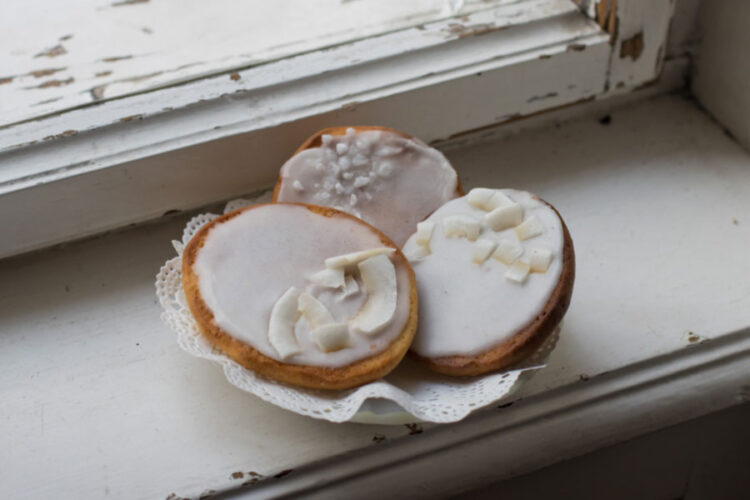
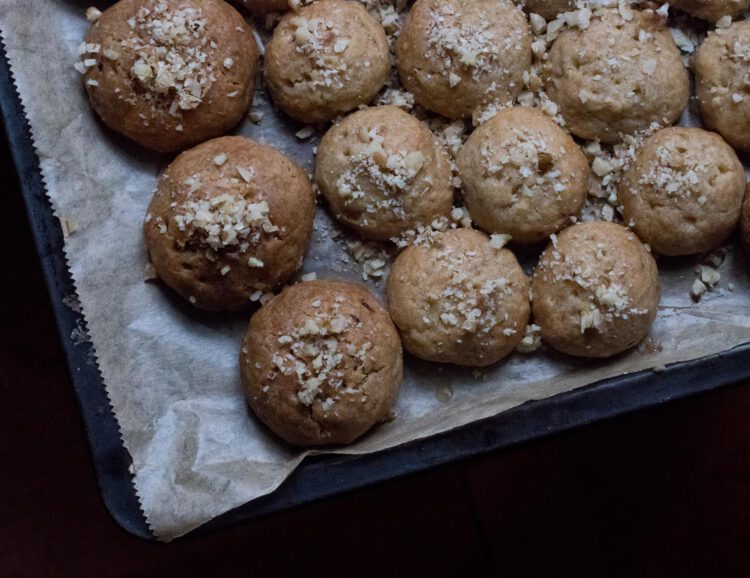


- 2025: Winterweiße Amerikaner
- 2024: Melomakarona
- 2023: Pistazien-Rosen-Torte
- 2022: Zitronenmuffins mit crémeux au citron
- 2021: Cheesecake-Marmor-Brownies
- 2020: Feigen-Apfel-Kuchen mit Kokos-Salzkaramell
- 2019: Hafermuffins mit Birne
- 2018: Apfel-Tarte mit Tahini-Karamell
- 2017: Birnen- und Traubenkaramell
- 2016: Gebrannte-Mandel-Hefezopf-Brot
- 2015: Mandel-Grießpudding mit Kardamom und Honig
- 2014: Frühstücksbrot
- 2013: Orangenkuchen
- 2012: Post aus meiner Küche Nummer 4: In der Weihnachtsschickerei
- 2011: Guinness-Cupcakes mit Baileys-Frosting
- 2010: Muffin-Cakepops
- 2009: Haferplätzchen